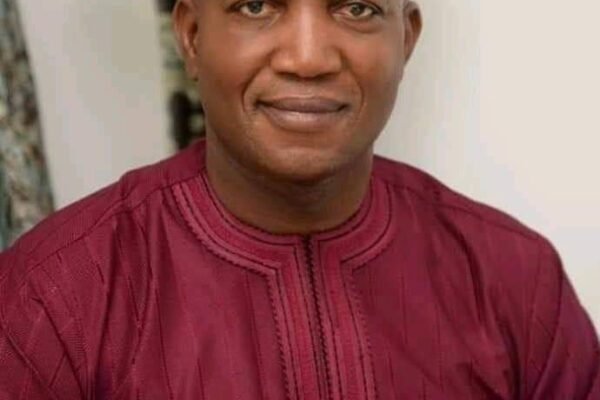
The lawmaker representing Delta North Senatorial District, Sen. Ned Nwoko, (PDP -Delta) has canvassed for the various social media platforms (YouTube Facebook Instagram Twitter etc) to have offices in Nigeria.
Nwoko made the call in an interview with the News Agency of Nigeria (NAN) in Abuja on Sunday.
He said that his call was premeditated for various reasons including revenue generation, ease of doing business, ease of complaints and litigation, employment opportunities among others.
Nwoko said that the presence of major social media platforms in the country was essential for fostering economic growth, job creation, efficient dispute resolution, and revenue generation for the nation.
According to him, Nigeria, Africa’s most populous nation with more than 200 million people, actively engages with popular social media platforms.
“These multinational social platforms widely used in Nigeria include, but are not limited to, Facebook, X, Instagram, WhatsApp, YouTube, Snapchat, and TikTok.
“Nigerians rank first in Africa for their extensive social media usage and second globally, with an average daily internet usage of three hours and 46 minutes, according to the latest Global Web Index (GWI) as reported by Business Insider Africa.
“In spite of the substantial usage of these social media platforms by Nigerians within the country, these companies have yet to establish offices in Nigeria,” Nwoko said.
He said that there were success stories of other multinational corporations, such as the MTN Group, Shell, Chevron, Nestle, Total, P&G, and others, which have established operations in Nigeria, contributing significantly to the nation’s economic growth and technological advancement.
“However, notably absent is their presence in Nigeria, a nation globally ranked second in Internet and social media usage,” Nwoko said.
He recalled that in 2022, the Federal Government through the National Information Technology Development Agency (NITDA), mandated all online platforms to register and open offices in Nigeria, and appoint contact persons with the government.
Nwoko also recalled that in June 2021, the Nigerian Government suspended Twitter (now X) after it removed a post by former President Muhammadu Buhari.
“However, the ban was later lifted after the social media platform agreed to open a local office, among other agreements.
“A case that could have been swiftly, efficiently, and effectively resolved, if the respective social media platform had established an office in Nigeria,” he said.
The lawmaker said though the multinational social platforms maintain offices in several countries like the United States, Canada, the United Kingdom, Germany, India, Singapore, Australia, Brazil, and others, there is none in Nigeria.
He explained that this strategy aims to cater to their user bases, manage regional content policies, cultivate local partnerships, and address specific market needs and concerns.
Nwoko expressed concern that the absence of offices for social media platforms in Nigeria poses issues of limited local representation.
“Addressing specific issues or concerns relevant to Nigeria takes a longer time and is less effectively handled due to distance and potential cultural or regulatory gaps.
“The lack of proximity also results in slower responses to user complaints, regulatory inquiries, or content moderation issues specific to Nigeria.
“Also missed economic opportunities as these platforms typically employ a diverse range of professionals, from technical roles to customer support, content moderation, marketing, legal, and managerial positions,” he said.
Nwoko said the absence of these offices therefore means missed opportunities for job creation, technology transfer, and contributions to the Nigerian economy through taxes and partnerships.
He said that the absence of these social media offices in the country poses difficulty resolving legal or regulatory issues pertaining to content, data privacy, or user rights. Nwoko therefore called on the ministries of Communication and Digital Economy, and Foreign Affairs to engage actively with the multinational social media platforms to encourage the establishment of offices in Nigeria.
He said that the potential economic benefits, job creation, and the enhancement of local engagement from establishing the offices in the nation could not be over-emphadised.
Nwoko urged NITDA to monitor compliance with existing regulations requiring online platforms to register and open offices in Nigeria, and ensure that social media platforms adhere to these requirements for the benefit of Nigerian users and the economy.
He called on the Nigerian Communication Commission to collaborate with relevant stakeholders and develop guidelines or incentives that encourage social media platforms to establish offices in Nigeria.
Nwoko also stressed the need for the Senate Committee on Establishment and Public Services to conduct a comprehensive review and assessment of the benefits of having social media platform offices in Nigeria.
He said the committee should also explore potential legislative measures that could incentivise or regulate their establishment.
Nwoko called on the Senate committees on Communication, Foreign Affairs, Media and Public Affairs and other pertinent committees to periodically review the progress made in engaging these social media platforms and report back to the Senate for evaluation and further legislative actions.
Sanusi Lamido Sanusi, the former Governor of the Central Bank of Nigeria, has offered guidance to President Bola Tinubu on the matter of assuming the role of Minister for Petroleum Resources. He cautions against this decision, as it would complicate efforts to increase transparency and hold the Nigerian National Petroleum Corporation Limited responsible.
He made this known while delivering his remarks at the Bank Directors Summit organised by the Bank Directors Association of Nigeria on Thursday in Abuja. Sanusi who was the CBN governor from June 2009 to February 2014, also adjudged the NNPC as the “most opaque oil company in the world.”
The vocal economist slammed the NNPCL for allegedly failing to remit enough foreign exchange into the government coffers despite the removal of fuel subsidy by the current administration. The former Emir of Kano also stressing the need to stabilise the foreign exchange market, noting that monetary policies in the last eight years had led to rising inflation and economic downturn in the country.
According to him, the idea of the president occupying the petroleum minister office will make it difficult for anyone to raise the question of accountability.
“The exchange rate needs to be stabilised and we have to address the fundamental question, why is there no money coming in? Why is the NNPCL not able to bring in dollars? Am sorry this is the question that cost me my job and I will continue asking this question until NNPCL fixes it up or until I die. Where are the dollars? We need to shine a light on the NNPCL. The finance minister cannot tell you because he doesn’t have a monitoring system that reports to him. The finance minister can’t tell you how many barrels of petrol we produce and export. It is only the NNPCL that can give those figures. The finance ministry needs to know how much oil we produce daily, how much we sell, and where the money is going”.
“We are no longer paying subsidies so where are the dollars? It was under recovery during the subsidy era and that has been stopped, so where is the money? This was the issue I raised for which I was suspended, well you can suspend me again. The NNPCL is the most opaque oil company in the world. When I was in the central bank for 15 years, they had not been audited. We have to follow the money from production to export to return, where is the money going? We paid N11tn in subsidy and there is no accountability up till now. The National Assembly called the NNPCL to bring the documents, but they refused”.
“By the way, let me advise that the idea of the President becoming a petroleum minister is not a good idea. The last president was the minister of petroleum for eight years. When I was governor of the central bank we had a minister of petroleum so when I talk about the NNPCL, I could attack Diezani Madueke. Now, nobody can talk about petroleum because for eight years if you talk, you are attacking the president. We need that buffer, somebody has to be there, so a minister has to be there who is held accountable by Nigerians”, he said.
In August, about three months after his inauguration, President Bola Tinubu split the Ministry of Petroleum Resources with the appointment of Ekperipe Ekpo as Minister of State, Gas Resources; and Heineken Lokpobiri as Minister of State, Petroleum Resources.
However, President Tinubu, in an apparent tradition of his predecessor, ex-President Muhammadu Buhari, kept the position of the substantive Minister of Petroleum Resources to himself.
Sanusi also called for a proper audit of the Nigerian National Petroleum Company Limited to unravel the country’s daily oil production, export and the accrued revenue, noting that this call was what cost him his job at the apex bank.
He maintained that the banking sector must shore up its trust deficit in the eyes of the public and that there is no need to amend the CBN Act to keep the apex bank free of political influences.
“It is important to talk about the current conversation emanating especially from the National Assembly, to amend the Central Bank Act. Let me add my voice to those who have said there is nothing wrong with the Central Bank of Nigeria Act. There is nothing wrong with BOFIA. The CBN Act is one of the best central banking laws in the world. In fact when we reviewed central bank laws, the only laws we saw that we would learn a few things from was Bank Negara of Malaysia”.
“Now if people who are supposed to implement a law don’t implement it, the solution is not to change the law, and this reaction is kneejerk if you take away the independence of the central bank and bring it under political control. You would hurt the system and on long-term, you are institutionalising the lack of autonomy. The reality is, you have an independent autonomous central bank whose independence was undermined by a combination of politicians and central bank actors. It is time to go back to what the central bank is supposed to do and implement the law”, he stated.
The ex-CBN governor also spoke about the use of Ways and Means and how resisted the pressure to go beyond the limit requited by the law.
“Look at the example of Ways and Means. That scenario only happened because, along the line, all checks and balances collapsed. When the National Assembly talks about Ways and Means, the question is: where were the oversight committees of the National Assembly? We were all asked when we were in position as governor to bring money, on several occasions. There was a day I was called by the finance minister that they needed N100bn. I told them they had reached the limit and we had to find other solutions to raise funds for the government without breaking the law”.
“If this tells anything, it is that when people start to complain about too many regulations, they need to think about when regulation was rolled back in America. Regulations are dynamic and can change. We have to ensure that banks are well-managed and that banks understand the risks that they run. Now, regulations are one thing of course and the actual doing of the regulations is another thing”, he said
President Bola Tinubu, while reiterating the vision to drive financial access and impose a culture of integrity and innovative technology, vowed to ensure the CBN under his watch follows all regulations. He also revealed plans to develop a financial regulatory framework to develop the country’s economy.
Tinubu, who was represented by the Minister of Finance and Coordinating Minister of the Economy, Wale Edun, said, “All issues raised from regulations, short-term liquidity in the foreign exchange market to long-term structural change, I can say that all those issues are been dealt with in the policies of the current administration. We will ensure to follow the law and do the right thing but it won’t all be done in one day. It is a direction of travel but it will take time to adjust.
“Finance banking is inherently risky and the dynamic nature of the challenges we face makes it imperative for us to collectively address them together, balancing the complexities of regulation and compliance in order to build the type of resilient system that would underpin the eventual rule to rapid, sustained and inclusive economic growth.”
On ongoing efforts to boost liquidity, the minister said, “All efforts are being made to bring in funds that will shore up the liquidity of the financial system of the foreign exchange system.”
On his part, the Chairman, Bank Directors Association of Nigeria, Mustafa Chike-Obi, said “The summit was focused on advocating for the banks’ interests and making sure they are willing partners.”
“This summit is a good platform to advocate for the interest of the banks, to make sure the banks are doing the right things and make sure they are a willing partner. The banks will be willing and able to partner with the government on these agendas of growth and reforms. We will work with you but we ask that you should please consult with us. The era of regulations without consultations should end. We are partners and if you consult with us, we will tell you how to accomplish the objectives more smoothly and cleanly.”
NNPC replies Sanusi
Meanwhile, the NNPC said it was focused at the moment on delivering the task that had been set for the national oil company, stressing that everyone was free to air their opinion.
NNPC’s Chief Corporate Communications Officer, Olufemi Soneye, told one of our correspondent that there would be no need for an official response to the claims made by the ex-CBN boss.
He explained that constant responses could hinder the enormous task before the oil company, adding that NNPC would rather concentrate in handling the work that it was established to deliver.
“Everyone is entitled to their opinion. Constant responses to every individual can hinder our work. Our focus remains on delivering energy security, managing ongoing projects, and implementing reforms,” Soneye said.
Erevision MediaTV Editor-In-Chief Robinson Erebi, spoke with Dr. Michael Amaegberi, the Executive Secretary of the Bayelsa State Higher Education Students Loan Board, in an exclusive interview to discuss the implementation of the loan scheme and other political issues.
In this interview, Dr. Amaegberi highlighted the laudable achievements of Governor Douye Diri’s administration in the educational sector, particularly in the area of higher education. He discussed the successful implementation of the students’ loan scheme, which has provided financial assistance to thousands of students in the state.
Dr. Amaegberi also shared insights into the positive impact of the scheme on students’ academic pursuits and how it has contributed to the overall development of the state.
Furthermore, the interview delved into other political matters, providing a comprehensive understanding of the current administration’s approach to governance and its plans for continuity in the second tenure. Dr. Amaegberi shed light on the strategies employed to ensure effective service delivery, transparency, and accountability in government.
This exclusive interview provides valuable insights into Governor Diri’s achievements in higher education and offers a glimpse into the administration’s commitment to the continued development and progress of Bayelsa State.
Erevision MediaTV’ Editor-In-Chief Robinson Erebi, spoke with Dr. Michael Amaegberi, the Executive Secretary of the Bayelsa State Higher Education Students Loan Board, to discuss the implementation of the loan scheme and other political issues.
In this interview, Dr. Amaegberi highlighted the laudable achievements of Governor Douye Diri’s administration in the educational sector, particularly in the area of higher education. He discussed the successful implementation of the students’ loan scheme, which has provided financial assistance to thousands of students in the state.
Dr. Amaegberi also shared insights into the positive impact of the scheme on students’ academic pursuits and how it has contributed to the overall development of the state.
Furthermore, the interview delved into other political matters, providing a comprehensive understanding of the current administration’s approach to governance and its plans for continuity in the second tenure. Dr. Amaegberi shed light on the strategies employed to ensure effective service delivery, transparency, and accountability in government.
This exclusive interview provides valuable insights into Governor Diri’s achievements in higher education and offers a glimpse into the administration’s commitment to the continued development and progress of Bayelsa State.
Click the Subscribe button to follow our YouTube Channel:
The attention of the Bayelsa State chapter of the Peoples Democratic Party (PDP) has been drawn to a malicious publication to the effect that the State Governor, Senator Douye Diri, and our party were engaging in a clandestine plot to frame up corruption allegations against the defeated All Progressives Congress (APC) governorship candidate, Chief Timipre Sylva, before the Economic and Financial Crimes Commission (EFCC).
The opposition party in the state, in a statement issued by its Publicity Secretary, Mr. Doifie Buokoribo, also claimed that the move was intended to frustrate Chief Sylva’s petition at the State Elections Petition Tribunal.
Reacting to the statement, the Bayelsa PDP Publicity Secretary, Mr. Ebiye Agu Ogoli, said it is clear from the APC’s spurious allegations that the party was suffering from the November 11 post-election traumatic disorder and that its key leaders and officials deserve to be medically examined.
Ogoli said Sylva and the APC, having lost badly in the election, were engaging in another round of misleading and vexatious propaganda designed to hoodwink gullible Bayelsans.
He said: “Chief Timpre Sylva, as a bad loser, has refused to acknowledge and accept the outcome of the November 11 governorship election for what it is – a free, fair and transparent poll.
“The election was widely adjudged by various local and international observers as one of the cleanest in recent times conducted by the Independent National Electoral Commission, in which incumbent Governor Douye Diri was re-elected via a landslide.
“We are at a loss as to the reasons for this latest senile vituperation thrown at our dear Governor.
“May we remind Chief Sylva and his deceptive cohorts in his party that the EFCC is a federal anti-corruption organ that is not within the remit or under the control of Governor Diri.
“We maintain that the PDP or Senator Diri was never involved in the running of the office of the former Minister of State for Petroleum Resources and if there are issues arising therefrom, it is not the business of the State Governor or our Party. So, we advise Sylva to face his travail (if any) and leave Governor Diri out of it.
“We also wish to state that the mandate freely given to His Excellency Governor Douye Diri as expressed by the good people of Bayelsa State will stand and be validated at the end of the day.
“We call on Chief Sylva to join hands with other statesmen to support the re-elected Governor Diri towards consolidating on the achievements so far recorded, with focus on the next four years of Shared Prosperity.
Let me, on behalf of the delegation from Bayelsa State, commend the United Nations Convention for Conserving River Deltas (UNCCRD) and the government of the United Arab Emirates for the successful hosting of this landmark event. That we can gather in this picturesque city of Dubai from all over the world at this time underscores our sense of commitment and determination to save our planet.
I must state, as earlier underlined by the leader of the entire Nigerian delegation, His Excellency President Bola Ahmed Tinubu, that the new global compact, which is emerging from COP 28, gives us all hope for a better tomorrow. This is why I join leaders, especially of sub -nationals, from some of the most vulnerable and impacted communities, the DELTAs, to re-echo a clarion call. We need little activism to restate that the world’s deltas and wetlands are increasingly facing extinction.
From my own Niger Delta, the impact of climate change continues to wreak unimaginable havoc on our environment, ecosystem, and human resources. Unlike other regions of planet Earth, our plight is confounded from both ends, creating a case of “double jeopardy.”
On the one hand, rising incidents of flooding and land degradation from torrential rain falls and inland water systems are common places. In recent years, such mobster floods, rising unimaginable levels, have left footprints in my home Bayelsa State, and many other places in the Niger Delta in Nigeria. Such specific reports have also come from other river deltas across the world.
Ladies and Gentlemen, matters are sadly worsening by the spectre of rising sea levels, which has severally been discussed at various sessions during this conference. Clearly a product of human activities, resulting in depletion of ozone layers and resultant melting of glacier water, the ocean waters around our coastal areas are swelling daily.
The oceans around our deltas have therefore continued to mount an unprecedented assault on our fishing ports, villages, and towns. In the past few years, at least twenty (20) of our coastal communities in my state have become almost submerged or lost a substantial amount of land to the surging and rising sea waters. These include Agge, Akassa, Agoro, Brass, Ekine, Ezetu, Foropa, Kolokuma 1 & 2, Odioama, Okpoma, etc.
According to the scientific reports from our experts, between 1991 and 2018, the shorelines of Bayelsa, its neighbours , Rivers State and Akwa Ibom State, witnessed considerable retreat and erosion, with respective measurements of 81,532 metres, 17,519 metres and 8,590 metres. The rates of shoreline migration and erosion were recorded at 11.1 metres per year, 7.2 metres per year and 5.5 metres per year.
In the context of erosion along the Nigerian coast, Bayelsa alone accounted for 66.6% of the erosion and shoreline retreat, while Rivers and Akwa Ibom contributed 14.43% and 10.63%, respectively.
In October 2022, my State encountered devastating floods, resulting in the near submersion of the entire state, including its capital city, Yenagoa. The UN Resident and Humanitarian Coordinator in Nigeria and Representative of the Secretary General, Mr Matthias Schmale, at my invitation, visited Bayelsa and accompanied me on a tour of some of the flood-impacted communities. At the end of the tour, he observed, and I quote: “What I saw reminded me of the images I saw of Pakistan; and the world took note of that. This is a crisis of major proportion that deserves everyone’s attention.”
Individuals lost their lives, homes, farmlands and livelihoods. As a government, we could not turn a blind eye to the myriad of challenges and sought proactive solutions. This has rendered governance more financially burdensome, an issue that warrants global focus and intervention. As leaders, it is incumbent upon us to devise effective short and long term solutions such as sustenance, shelter, alternative educational facilities for children, and the protection of vulnerable members of society, particularly the girl child.
During my visits to affected communities, I recognized the urgency in managing our deltas, water bodies, sea-level rise, biodiversity, and the consequential livelihood losses of our mangroves, as well as the pollution of our deltas. These endeavours will significantly contribute to addressing food insecurity, hunger, migration, and the associated settlements and conflicts.
Projections indicate that a one-meter rise in sea levels in Nigeria could compel up to 80 per cent of the delta’s population to seek higher ground just as flooded 18,000 km2 of land results in damages valued at US$9 billion, and necessitate the relocation of up to 3.7 million people. These alarming consequences of climate change are not limited to the Nigerian Niger Delta region but are shared by coastal deltas worldwide.
We also believe that this figure will be higher if inland deltas and hinterlands of existing deltas are included.
This is why we join in the “Deltas Unite” to cry to the rest of the world to work with us to address this situation. The government of Bayelsa State will, therefore, continue to support and give priority attention to all activities and programmes of Deltas Unite. While this effort at our end is directly domiciled in the Office of the Executive Governor, we will continue to assemble the best of technical, professional, and administrative expertise.
In this vein, I would like to announce the readiness of the government of Bayelsa State to host the Inaugural International Summit of the Deltas in Yenagoa, Bayelsa State, Nigeria in 2024. This will enable our various experts, who by the way have done incredible work so far, to further interface and articulate our common positions on the pertinent issues. Of outmost priority is the need to bring our plight to the front burner as a major thematic issue, especially a United Nations Convention for Conserving River Deltas (UN- CCRD).
The unveiling of the UNCCRD represents a pivotal step in our collective efforts.
It is imperative that we engage extensively with the United Nations and encourage more nations to endorse our coordinated initiative aimed at safeguarding the lives and livelihoods of the millions of people residing in river and ocean-facing deltas. We cannot overlook the undeniable reality that the sustenance of a burgeoning populace hinges significantly on these deltas, encompassing crucial global climate change mitigation efforts.
Consequently, we must accord paramount importance to their preservation and governance. Our collaborative mandate following COP28 entails the operationalization of the UN Convention for Conserving River Deltas commencing next year.
We are compelled to seize this opportunity to safeguard the lives, cultural heritage, and sustenance of the millions reliant on our deltas for survival. Our deltas are not merely repositories of wealth but also hold the potential to substantially mitigate the multifaceted challenges posed by global climate change, aiming to achieve significant progress by 2030.
In addition, we cannot overlook the profound impact of oil pollution on our deltas, as evidenced in the damning findings of the Bayelsa State Oil and Environmental Commission (BSOEC) Report. The report serves as a stark reminder of the environmental challenges stemming from oil pollution in our region. It is my firm belief that the newly unveiled United Nations Convention for Conserving River Deltas holds promise in addressing these pressing issues. Bringing all stakeholders together, including indigenous people and local communities, is the “game changer” in the management of our global deltas. The UNCCRD provides the right platform for citizens’ participation in the governance of their deltas.
I, therefore, encourage you not to relent in supporting the UNCCRD until it is operationalized.
Finally, permit me to appreciate the United Nations for providing us this platform to further engage and recognize the CCRD for the protection of our global deltas.
Thank you all for listening.
*Being an address by His Excellency, Sen. Douye Diri, Governor of Bayelsa State, Nigeria, during the unveiling of the United Nations Convention for Conserving River Deltas (UNCCRD) at the COP 28 i. Dubai on December 4, 2023
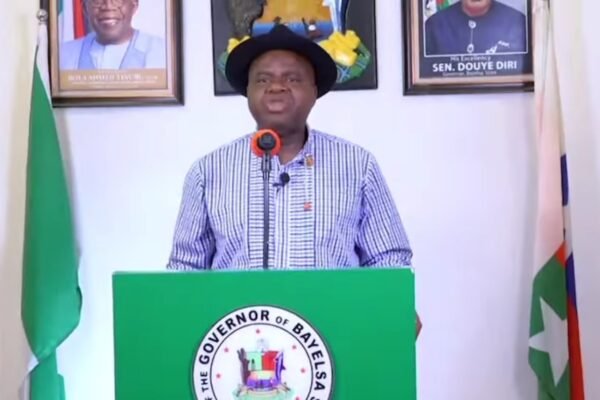
Governor of Bayelsa State, Senator Douye Diri, on Monday, took his campaign against the threats of ocean surge, coastal erosion, environmental pollution and their related impacts to the global stage.
Speaking during the United Nations Convention for Conserving River Deltas (UN-CCRD) unveiling session of the ongoing Climate Change Summit (COP28) in Dubai, United Arab Emirates, Governor Diri solicited global concerted efforts to address the effects of oceanification and climate change on Bayelsa coastal communities.
A statement by his Chief Press Secretary, Mr. Daniel Alabrah, quoted him as saying that in the past few years, no fewer than 20 coastal communities in the state had almost been submerged or lost substantial amount of land to ocean surge and rising sea waters.
He said the communities include Agge, Akassa, Aghoro, Brass and Ekeni.
According to the governor, “scientific reports from our experts indicate that between 1991 and 2018, the shorelines of Bayelsa, its neighbours, Rivers State and Akwa Ibom State, witnessed considerable retreat and erosion, with respective measurements of 81,532 metres, 17,519 metres and 8,590 metres. The rates of shoreline migration and erosion were recorded at 11.1 metres per year, 7.2 metres per year and 5.5 metres per year respectively.
They also include Ezetu, Foropa, Koluama 1 & 2, Odioama and Okpoama among others.
“In the context of erosion along the Nigerian coast, Bayelsa alone accounted for 66.6% of the erosion and shoreline retreat, while Rivers and Akwa Ibom contributed 14.43% and 10.63% respectively.”
Diri noted that climate change continues to “wreak unimaginable havoc” on the Niger Delta of Nigeria and on its environment, ecosystem, and human resources.
“Unlike other regions of planet Earth, our plight is confounded from both ends, creating a case of “double jeopardy.” We need little activism to restate that the world’s deltas and wetlands are increasingly facing extinction,” he said.
The Bayelsa helmsman called on leaders to devise effective short and long-term solutions such as “sustenance, shelter, alternative educational facilities for children, and the protection of vulnerable members of society, particularly the girl child.
“These endeavours will significantly contribute to addressing food insecurity, hunger, migration, and the associated settlements and conflicts.
“This is why we join in the “Deltas Unite” (campaign) to cry to the rest of the world to work with us to address this situation.”
He said the government of Bayelsa State will continue to support and give priority attention to all activities and programmes of Deltas Unite.
“In this vein, I would like to announce the readiness of our government to host the Inaugural International Summit of the Deltas in Yenagoa, Bayelsa State, Nigeria in 2024. This will enable our various experts, who by the way have done incredible work so far, to further interface and articulate our common positions on the pertinent issues.“
As the first tenure of Bayelsa State Governor, Sen. Douye Diri’s prosperity administration rounds up with prospects of continuity, having won a landslide victory at the recent 2023 Governorship poll, Erevision MediaTV sought to know the state of affairs in some critical areas of the educational sector.
In this interview, Erevision MediaTV’s Chief Correspondent Mr. Robinson Erebi spoke exclusively with the Executive Secretary of the Bayelsa State Higher Education Students Loan Board Dr. Michael Amaegberi on implementation of the scheme and other political issues.
Excerpts:
My name is Robinson Ere Erebi and I’m reporting for Erevision MediaTV. May we meet you sir?
Dr. Amaegberi: My name is Dr. Michael Amaegberi and I’m the Executive Secretary, Bayelsa Higher Education Students Loan Board.
Robinson Erebi and Dr. Michael Amaegberi
Robinson: So how has it been sir?
Amaegberi: The journey has been so good. We’ve had our own challenges and challenges will always be there, but we thank God that we have a government that is very, very interested in the academic welfare of our students. So, we’ve enjoyed tremendous support from the government, of course, our major source of income is from the government. So, government has been very supportive, and so far, we can say that we’re doing very well.
Robinson: How did it start…how did the Board come about?
Dr. Amaegberi: Okay. The Students Loan Scheme as you’re aware and as Bayelsans now know, effectively commenced operations in 2019 after it was launched in December of that year, but we started giving loans to students in 2020, at the twilight of the administration of His Excellency, now Senator Henry Seriake Dickson. He was actually the one that established the loan board. And at the tail end of his administration was when we started disbursing this loans. But when the Prosperity Governor, the “miracle” Governor took office, in fact, he became more deliberate in funding our activities. And by the special grace of God from that time till now, over seven thousand students have benefited from the Students Loan Scheme and we’re still counting. We’re hoping that now that he has even won second term in office, it can only get better.
Robinson: What does it take for one to access the scholarship?:
Dr. Amaegberi: Okay…sorry, it’s not scholarship. It’s a loan. It’s an interest free loan. Yes students come here. For now, what we’re doing is manual application. Students come here, they apply. They take application forms, they fill it. Once they meet all the requirements…one of the requirements is that you must be a Bayelsans first of all. The second is that you must have gained administration into a university. A government owned university within Nigeria. And then you have your identification letter of course, and then you must produce two guarantors for us to contact just in case we cannot find you. And then you have a bank account. So that’s basically, those are the requirements. A few other requirements you need to go to the court to swear an affidavit that is stamped that you’re actually abiding to our terms and conditions. So those are he simple steps that you need to take. Yeah, the law says that you must have one of the guarantors as a civil servant of grade level 12 and above. But we listened to the cries of Bayelsans that most of the civil servants are not willing to sign and that means that they’re not going to be benefitting so we tried to bend over backwards to accommodate all people, you know, all students that come here whether they have civil servants or not, you know, as guarantors, we still consider them as long as you’re a Bayelsans and you’re able to produce two people, two credible persons that will verify, and of course, they also submit their passports as well as their ID card for us to know where they’re working and all of that. Then for the students, they also come with their bank verification printout. So whatever it is, you know, we have a secure system where we can always trace these people to wherever they are. That’s how we’ve been operating so far. But, you know, going forward, we’re hoping that by January we want to launch the online application portal.6 So that we don’t need to deal with physical students as they come. We have our verification team that would verify whatever information that is supplied online, then we just pay online as it where. So we’ll not be having students coming physically, crowding our office and all of that. So that’s where we’re trying to go. We’re trying to go digital so that even if you’re in Maiduguri you don’t need to come down and get a physical form. You can just go to our portal, once the portal is open and you apply and get paid as soon as we finish the processing, we pay you. That’s where we’re going now.
Robinson: Okay, so far about seven thousand students have enrolled in the…
Amaegberi: (cuts in) …Yes, yes, more than seven thousand.
Robinson: Yeah, based on our population, is it that people are not aware of the scheme or is it that they don’t have guarantors to sign for them. What’s their reasons, why are they not signing for people so that more students can have access to this very laudable scheme?
Dr. Amaegberi: Well, em…I think that seven thousand for now is not a bad number. We still have a lot of forms that we’re paying. As I’m speaking to you now we want to pay some more students in NDU. And so every month, you know, we’re paying students. And so I cannot say that seven thousand students, from only Bayelsa o! Bayelsa indigenes benefiting from a system that has operated effectively for about three years is not a small figure to speak. The total number of Bayelsa student we cannot ascertain as a Board now, but we know that not everybody expected to also come for the loan, you know. We can have maybe twelve thousand or twenty thousand Bayelsa students but only those who need it, who really are finding it difficult to pay school fees, do you understand? It’s only those who really need it and are finding it difficult to pay school fees that are expected to come here. So not all Bayelsans would come even though we do not discriminate, even if your father is well to do, but as long as you come here and apply for the loan we feel that you need it so we’ll pay. But then, we always encourage people who actually need this loan, and we have actually seen people would say “no, I don’t want the loan. I can take care of my fees”. So it is not a free, it’s a loan that is repayable. And of course, the only good side of it is that whenever you’re repaying, you’re not paying with interest. You’re only paying the same amount but it’s even going to be pro-rated, you pay little by little, not that you’re going to pay all at once. So that’s he good side of the whole thing. But while it is open for all Bayelsa State students, we still know that not all the students would need the loan.
Robinson: Thank you very much. We’re very much aware that this scheme has helped a lot of parents in Bayelsa State. It’s not easy for people to raise money, even if you have to get loan from the banks…getting guarantors, getting collateral is not easy and I think it’s a very laudable project. But now we at the twilight of this administration, what are your expectations in the years ahead, particularly with the Governor coming for a second tenure?
Dr. Amaegberi: Well, the Governor in about four years now, we know has done very well. He has done very well in the area of infrastructure. Of course, construction of roads is one of his priorities and he’s actually taking the roads down to the hinterlands…our local government headquarters in the past, which has not been connected with roads. Ekeremor now, we can drive to Ekeremor and the other road from Ekeremor to Agge I think is being awarded. We can now drive to Angiama in Southern Ijaw, the bridge crossing to the local government headquarters, Oporoma is being constructed. The road to Brass is also being sand filled and progress is being made. So em… a lot of work has been done. Beyond infrastructure even within the State capital a lot of road networks, you know, here and there. The government has paid so much attention to education. Education is one other critical area that the Governor has done very well. And even as he’s winding up, he’s not relenting. In fact, as far as he’s concerned he wants to finish very strong. So even till the last day of his administration it would be like the first day of his administration. So he’s not relaxing because he has won election. And today, I think he has just presented a budget. If you look at that budget too, a lot of attention has been given to infrastructure, education, health. Health is another critical area that the Governor has done, you know, building hospitals, health care centers, and of course, you’re conversant with the Health Insurance Scheme where befitting structure was built and that scheme is doing very well. We have the Education Development Trust Fund which is also taking care of Secondary Schools – their needs, feeding and so on. So a lot, a lot, a lot, and of course the technical college is there. This administration is a prosperity administration and he’s paying so much attention to technical know-how. He want Bayelsans to be equipped with skills, you know. So that they’ll be able to be providing services to whoever needs them. It’s not about everybody going to school, coming out and looking for employment everywhere. What he wants is for Bayelsans to have the relevant skills both in oil industry and other places, you know. You’re aware of the Diri skills acquisition programme that is also in place where a lot of people have learnt how to make soap, make hair, learnt how to cook and all of that. A lot of things are…and Bayelsans are happier. You know, when you have skills and you’re able to put these skills to use, you don’t need to look for somebody to come and employ you to get money. Everyday you can do something and make money. So a lot is being done in the area of empowering our people to be independent. And of course, there’s also this scheme where every month Douye Diri, you know, makes provision of about 150 – 200 thousand naira to three persons per Ward in the one hundred and give Wards in Bayelsa. That’s a lot of money going into entrepreneurship. Governor Diri has done so much and that’s why Bayelsans overwhelming voted for him to return for a second term. And I believe that as we’re going into the second term, you know, things will get better. Bayelsans would live better lives, prosperity indeed, will come to Bayelsa. I think the budget now is budget of “shared prosperity” or so. Consolidation and shared prosperity. I think that Bayelsans will enjoy good governance. Of course, you can see that there’s peace and stability in Bayelsa State. The Governor is a man of peace and his peaceful demeanor has attracted him to every Bayelsan. That’s why they voted for him massively, and he had that landslide victory over the APC in the last election. And so, all I can say is that Bayelsans have done well by voting Governor Douye Diri and it’s going to get better, hopefully in the next four years that he’s going to be in the saddle in Bayelsa State.
Robinson: Are there any challenges that you encountered?
Amaegberi: Well of course! Everything would have its own challenges. Challenges would just be in terms of funding. Funding may just be the major challenges. Our core function, our core responsibility here is to make sure that every Bayelsan who applied for his loan, you know. Who has come to say I’m finding it difficult to pay school fees should be able to get something to pay his fees. That’s the core responsibility that we have, and of course, you know that that is about money being made available. So once funds are available, we’ll always meet our obligations. And like I said, Governor Diri has been very deliberate in making sure that every month, you know, we have something to fund our responsibilities. The other side of it is that sometimes we get overwhelmed by the number of applications. So, we have a situation where some people would apply for a month, two months, they’ve not been paid. Those are issues, but I believe that in the coming year we’re going to fashion out a way wherein applications would not be lying down here for three four months. When we start the portal, what we intend to do is that once we’re able to get to applications that we’re able to pay for that month, we’ll just close he portal for that period, and then open it after we have treated to those ones and paid them. So that anytime you open the portal and you’re able to apply early and we get to that number, we just shut the portal down and then we process the ones that we can pay so that at every time, once you apply, you get paid so that you don’t apply and keep it for months before you get your payment. So that’s what we’re trying to do. And if we’re able to get more funds, why not? As many as we can get in a month, we’ll be able to deal with them. Now, we’re trying to see how we can get some kind of donations from donor agencies. International donor agencies. We’re trying to contact them and make sure that they assist us. It is not an easy thing to get money from these international bodies but we’re using certain person’s know-how to go about these things to do that. We tried to write to Local Content here but several attempts have been made, they have not been able to respond to us We’re believing that in the coming year we’ll put much more effort to ensuring that they also support us in one way or the other. These are the things that we’re trying to do but like I said, the major challenge is just money. Funds are coming but it’s something that cannot match the number of students that are applying because the student applications are increasing by the day as people get to know about the loan scheme every other day. So that’s where we are, that’s the major challenge. The good thing is we have also started making some recoveries, you know. Some payments have started coming from those who have benefited before. What we did, even though the law says that until you graduate, especially those in the undergraduate programme, until you graduate before you start paying. But what we did is that if you have somebody who can be paying for you while you’re still in school, we contact them and they start paying and people are responding.
Robinson: What about those that do not have jobs after their graduation, how do you recoup your money?
Dr. Amaegberi: What we’re saying is that you to graduate one year after Youth Service before you start payment. Now if you finish your Youth Service and you’re not able to pay, we’re not going to come after you with police or anything. What we do is that we contact you, and say youngman, young lady you took loan and by our records you’v finished school, you have finished your youth service one year after so you need to start paying back this money, you know, in installments. And whatever it is that we agree, then we start recollecting that money based on agreement. But what the law says is that you should pay this money within a period of 3 – 5 years and that’s a long time enough for anybody to, you know, whether…we have people that are not even working but are building houses. That’s why Douye Diri is also emphasising on skills so that you don’t come out from school and say “I don’t have a job”. You should be able to do something to support yourself. And whatever it is that you’re doing, you can part with five thousand Naira, ten thousand Naira in a month you’ll be able to pay this monies within that time frame.
Robinson: How much are you spending annually for this loans scheme.
Dr. Amaegberi: Well, what we spend annually is within the neighborhood of three, four hundred million in a year. And what we’re doing is payment of the students school fees, you know. So I can say that we have spent well over 1.5 billion from when we started to this year.
Robinson: That is from 2019 to…
Dr. Amaegberi: Yeah 2020, that’s when we started paying. So, from 2020, 2021, 22 and this is the fourth year. We have spent well over 1.5 billion Naira paying the school fees. What we have gotten back…. we have also gotten back some money but that’s in small bits because it’s not everybody that has benefited that is paying now, you know. So, we’re gradually getting some incomes monthly. At least, every month we’re getting nearly a million plus as repayments that are also coming. That’s also helping us.
Robinson: We’re talking about the Governor and second tenure. How do you see this second tenure. And by the way, how was the elections?
Dr. Amaegberi: Like I said, you know, I’ve talked about the elections before. Elections were largely peaceful even though there were threats of violence and all that. In some places of course, there were skirmishes violent behavior from certain political parties, but you know, with the Governor’s peaceful disposition, I think the grace of God that is upon him enveloped the entire state and we didn’t quite hear much of killings. We only heard about certain person that was killed in Brass or so. But largely, it was peaceful and like the Governor alluded to, the election was free, fair, you know, and to a large extent, credible because the expectations, and of course, all the polls before the election pointed to the fact that the Governor was way ahead of his opposition. But you know, they came with all the fierce stories about Federal might, they were coming to write results and all of that but unfortunately for them, the Governor also was a tactician and in all their plans they failed. And we have victory at the end of the day. The election at the riverine areas was tough, security was a little bit of a challenge, but at to the end of the day as God would want it, we came out victorious and we won the election fair and square.
Robinson: Congratulations!
Dr. Amaegberi: Thank you.
Robinson: Is there anything you want to add to what you’ve said already? A word to Bayelsans, a word to the Governor, and perhaps, the students that you’re also assisting out there. Are there feedback mechanisms where you get to know their performance, so we know that at the end of the day they’re making very good use of this opportunity?
Dr. Amaegberi: What we’re doing is e every other month we do a campus tour of what is going on. We visit the various campuses where our students are and all of that. And we’re aware that the students are now doing better because they no longer border themselves so much about school fees and they concentrate more on their studies. For the schools that are within Bayelsa State we have an understanding with them. So once a student has shown proof that he has applied for the loan but is yet to pay, he or she can be allowed to write exams. So that’s also a breather for them, you know, it makes them to settle well to study. And so that’s what we’re doing. For Bayelsans, I believe that they should expect the best. My expectations for the next four years is that Bayelsa would progress much more than it is now. The State is already wearing a new look in terms of infrastructural development, and I believe that the next four years a lot of the projects that are ongoing will be completed. And of course, new ones would be flagged off for whoever is coming to continue. I think that if every Governor in the past years have been doing what Douye Diri is doing, Bayelsa State would have opened up more than the way it is. We’re not saying others did not do well, they tried their best but we feel that more progress would have been made if this type of deliberate effort had been made but by and large, , something have to begin from somewhere and we’re hoping that Douye Diri is setting a good standard, you know. He also rode on the back of his predecessor, continuing the projects and then finishing them, starting his own new ones and so on. So we believe that this kind of continuity should continue so that subsequent governments would continue to make progress and take us to the “El Dorado” of our dream as far as Bayelsa State is concerned.
Robinson: Thank you very much, sir. I want to commend you and also encourage you to continue doing better, and I hope that you would continue through the next year.
*Infrastructure, Education, Health, Environment Top Appropriation
Bayelsa State Governor, Senator Douye Diri, on Wednesday, presented the 2024 budget of N480.99 billion to the State House of Assembly for consideration and passage.
Presenting the appropriation bill christened: “Budget of Sustainable and Shared Prosperity,” Governor Diri recalled that in October 2023, the assembly approved the 2024-2026 Medium Term Expenditure Framework and Fiscal Strategy Paper (MTEF and FSP) for the state.
He explained that the budget proposal was predicated on the assumptions contained in the approval of the assembly.
His words: “Mr. Speaker, I wish to present the 2024 budget estimates to the House. We are guided by the desire to prepare a realistic, implementable and prioritised budget, which is a reflection of the aspirations and wishes of critical stakeholders, and the economic realities in the country.
“I hereby present to you the 2024 budget with a total size of ₦480,993,632,369.00.”
He said the 2024 estimates would be funded through statutory allocation, Value Added Tax, 13% derivation, internally generated revenue and other capital receipts.
On proposed expenditure, Diri said total personnel cost would gulp N69.120 billion representing 14.37%, total overhead cost N54.096 billion representing 32.04% while total capital expenditure was put at N257.777 billion.
Giving a breakdown of the sectoral allocation, the state’s helmsman stated that the Works and Infrastructure Ministry got the lion’s share of N141.837 billion followed by that of Education, which got N49.888 billion.
Also, the sum of N26.41 billion was earmarked for the Ministry of Health, Environment got N15.554 billion while Agriculture and Natural Resources was allotted N14.886 billion.
Youths and Sports Ministry got N7.656 billion, Lands and Housing N6.876 billion while the Ministry of Power was allotted N6.49 billion among other ministries.
Diri also reviewed the 2023 budget performance, which he said achieved considerable success and consistency in critical areas such as, security, education health, agriculture, human capacity building, infrastructure development among others.
“We built and upgraded health facilities across all LGAs and health-related tertiary institutions, including completion and furnishing of the first psychiatric hospital in Bayelsa State.
“Also, in partnership with Fly Zipline, we established a health chain distribution system to cater for drug distribution and emergency health matters using drones.
“The Health Insurance Scheme enrolment is also growing by the day. As at 2020, our mobilisation was limited to the public service. We went further in 2023 to launch the “Diri Care” programme, which boosted the enrolment of the informal sector.
“The total enrolment as at November 2023 is 149,067 with civil servant enrollees totaling 118,030, vulnerable population 27,803, and the informal sector 3,134.
“We have in the past three years ensured that the Civil Service is given the necessary attention (including the prompt payment of salaries and regular promotions) for an effective work force, and to enhance the economic and social development of the state because ours is predominantly a civil service State.
“In addition, this administration consistently ensured that the entitlement of our senior citizens (by way of pensions and gratuities) are paid promptly. Over N3.3billion was spent on gratuities and N10.8billion for pensions in 2023.
“Let me assure you that, even in the coming year, we will continue to meet our obligations to the senior citizens within the limits of available resources.”
In his remarks, Speaker of the House of Assembly, Abraham Ingobere commended the Prosperity Administration for its commitment to development of the state as well as maintaining a harmonious relationship with the three arms of government.
Ingobere, who particularly applauded the governor for prudent management of the state’s resources in executing project, also congratulated him on his recent victory and re-election in the November 11 governorship poll in the state.
He assured that the 7th Assembly under his leadership would ensure timely passage of the budget estimate within three weeks.
Prince William is said to be counting days till King Charles abdicates throne, and he becomes the next King of Britain, claims a close pal of Prince Harry.
In his new book Endgame, Prince Harry and Meghan Markle’s friend, Omid Scobie, described William, the Prince of Wales, as “selfish in his quest to become King.”
He also portrayed William as dismissive of King Charles’ “passions” for environmentalism, preferring to focus on his own initiatives.
Making a bombshell claim about William, Prince of Wales, Scobie wrote that he can’t wait to “ascend to the throne.”
“And a real impatience is created around him,” the author added, according to OK! Magazine.
The book which promises to “make the royal family feel ashamed,” portrays William as somewhat heartless, showing little consideration for his father’s extensive environmental efforts.
This purportedly left the King feeling disheartened, especially when excluded from his son’s Earthshot Prize awards.
Kindly share
Cookie Consent
We use cookies to improve your experience on our site. By using our site, you consent to cookies.
Contains information related to marketing campaigns of the user. These are shared with Google AdWords / Google Ads when the Google Ads and Google Analytics accounts are linked together.
90 days
__utma
ID used to identify users and sessions
2 years after last activity
__utmt
Used to monitor number of Google Analytics server requests
10 minutes
__utmb
Used to distinguish new sessions and visits. This cookie is set when the GA.js javascript library is loaded and there is no existing __utmb cookie. The cookie is updated every time data is sent to the Google Analytics server.
30 minutes after last activity
__utmc
Used only with old Urchin versions of Google Analytics and not with GA.js. Was used to distinguish between new sessions and visits at the end of a session.
End of session (browser)
__utmz
Contains information about the traffic source or campaign that directed user to the website. The cookie is set when the GA.js javascript is loaded and updated when data is sent to the Google Anaytics server
6 months after last activity
__utmv
Contains custom information set by the web developer via the _setCustomVar method in Google Analytics. This cookie is updated every time new data is sent to the Google Analytics server.
2 years after last activity
__utmx
Used to determine whether a user is included in an A / B or Multivariate test.
18 months
_ga
ID used to identify users
2 years
_gali
Used by Google Analytics to determine which links on a page are being clicked
30 seconds
_ga_
ID used to identify users
2 years
_gid
ID used to identify users for 24 hours after last activity
24 hours
_gat
Used to monitor number of Google Analytics server requests when using Google Tag Manager