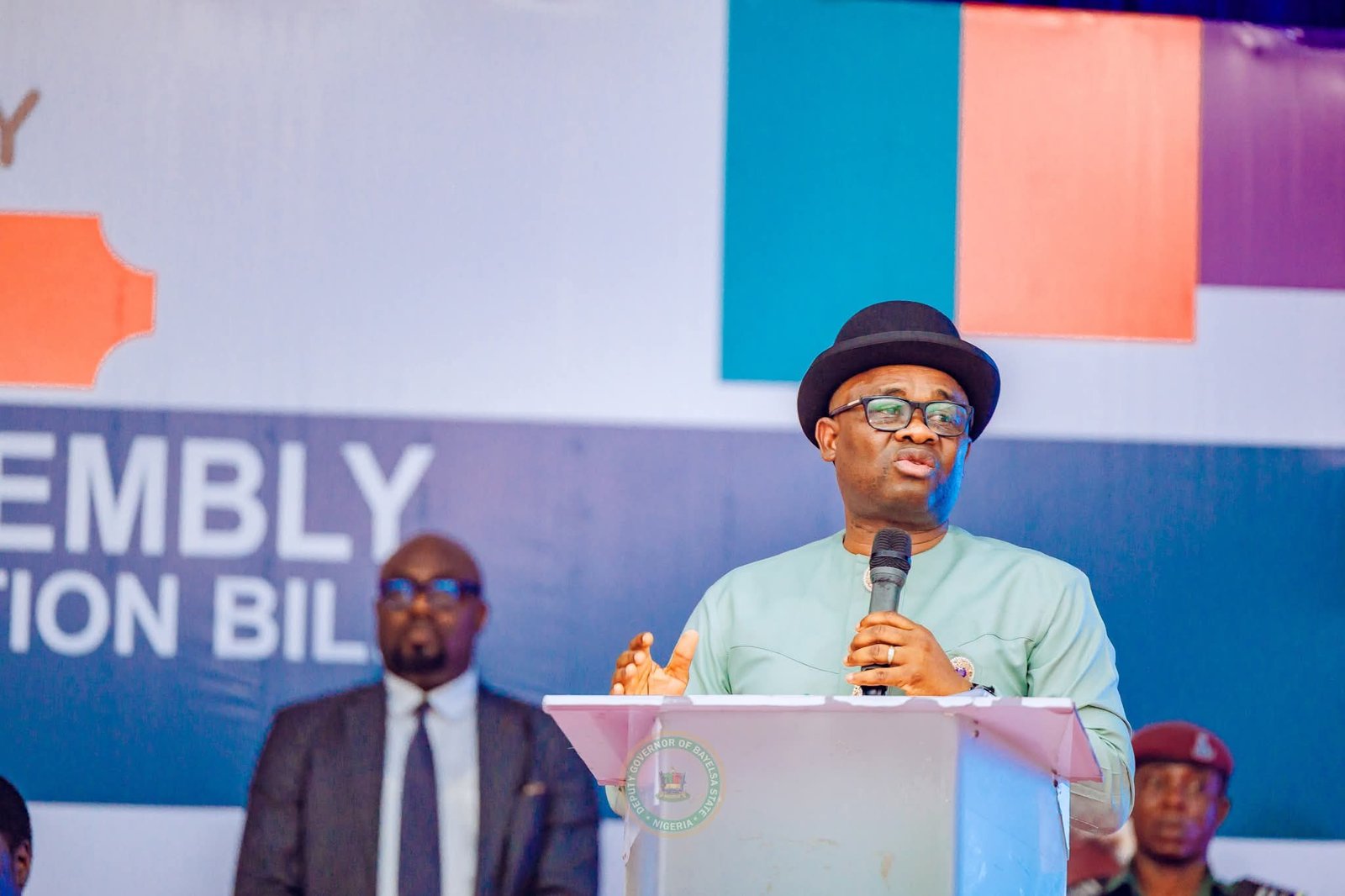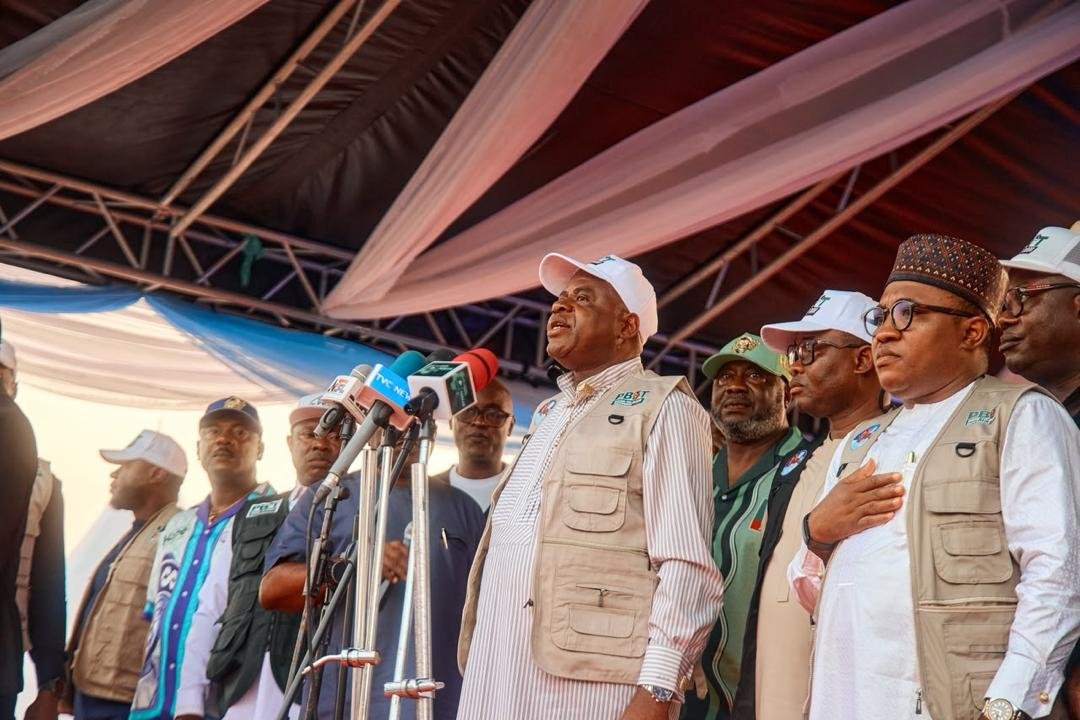
Igali urges Creek-to-Creek Movement to champion peace, environmental restoration, youth empowerment and sustainable economic development
The National Chairman of the Pan Niger Delta Forum (PANDEF), Ambassador Dr. Godknows Boladei Igali, has proposed the establishment of a Niger Delta Investment and Development Fund to mobilise and strategically invest resources for the region’s long-term economic prosperity.
Thank you for reading this post, don't forget to subscribe!
Igali made the proposal while delivering the keynote address at the summit of the Creek-to-Creek Movement in Port Harcourt, Rivers State, on November 21, 2026.
Speaking on the theme, “Regional Development, Coastal Development and Sustainable Unity and Peace in the Niger Delta,” the PANDEF chairman called for a new development philosophy that would move the region beyond its traditional dependence on oil and gas towards a diversified, inclusive and sustainable economy.
He explained that the proposed fund would provide an investment platform through which resources could be mobilised from governments, the private sector, communities, corporate organisations and development partners to finance crit ical sectors of the regional economy.
According to him, the initiative, which PANDEF is developing in collaboration with the Nigerian Exchange, would operate within an appropriate capital-market framework, subject to regulatory oversight by the Securities and Exchange Commission (SEC).
“The objective is not merely to accumulate money, but to build a sustainable investment institution that will generate returns, create wealth, stimulate economic activities, provide employment opportunities and finance projects that can transform the Niger Delta,” he stated.
He added that the proposed fund would support investments in infrastructure, agriculture, fisheries, industrial development, energy, education, healthcare, technology and tourism.
Igali described the initiative as a strategic intervention to ensure that the region saves and invests part of the wealth generated from its natural resources rather than consuming everything in the present.
“Our message is clear: the Niger Delta must not only be a region that produces wealth; it must also be a region that saves, invests and builds lasting wealth for generations yet unborn,” he declared.
Calls for Stronger Regional Integration
The PANDEF chairman emphasised the need for greater cooperation among the six states of the South-South geopolitical zone, namely Akwa Ibom, Bayelsa, Cross River, Delta, Edo and Rivers.
He recalled the establishment of the BRACED Commission following regional engagements in Calabar and Asaba, stressing that the initiative should receive renewed support to promote collective planning and shared development objectives.
He noted that regional collaboration would enhance transportation infrastructure, coastal protection, fisheries development, tourism, industrialisation and environmental restoration.
Igali also urged the Creek-to-Creek Movement to promote a development philosophy that recognises waterways as economic corridors connecting communities, markets and investment opportunities rather than barriers separating the people.
He commended South-South governors for ongoing infrastructure projects in previously isolated communities but called for more deliberate investment in roads, bridges, waterways, modern jetties, landing facilities and navigational infrastructure.
He further described the Federal Government’s proposed 750-kilometre Lagos-Calabar Coastal Highway and the 415-kilometre East-West Road as critical infrastructure projects that must be delivered.
“These two roads will not only benefit the people of the Niger Delta but also help open up the country to the area’s abundant natural resources,” he said.
Advocates Blue Economy, Economic Diversification
Addressing the economic opportunities available to the region, Igali urged Niger Delta stakeholders to prioritise the development of the blue economy, particularly commercial fisheries, aquaculture, fish processing, maritime transportation, port services, shipbuilding, coastal tourism and renewable energy.
He observed that the region’s extensive waterways, coastline, mangroves and aquatic resources offer enormous economic opportunities that remain largely underutilised.
He called for a transition from subsistence fishing to modern commercial fisheries supported by technology, cold-storage facilities, processing infrastructure, financing and improved market access.
The PANDEF chairman also advocated learning from successful delta economies across the world, including the Netherlands, Vietnam, Bangladesh, the Mississippi Delta in the United States and Egypt’s Nile Delta.
He said the experiences of these countries demonstrated how integrated planning, environmental management, transportation and investment could transform geographically challenging regions into centres of economic prosperity.
However, he cautioned that the Niger Delta must adapt relevant international experiences to its peculiar geographical and environmental circumstances rather than copy foreign development models wholesale.
Urges Action on Environmental Degradation
On environmental sustainability, Igali described pollution, oil spills, gas flaring, mangrove destruction, coastal erosion and flooding as major threats to the livelihoods and economic survival of Niger Delta communities.
He cited estimates of about 7,000 major oil spills involving between nine and 13 million barrels since the commencement of oil exploration, alongside approximately nine billion cubic feet of gas flared over the years.
Referencing the 2011 United Nations Environment Programme (UNEP) environmental assessment of Ogoniland, he noted that sustainable environmental recovery could take between 25 and 30 years if recommended remediation measures were consistently implemented.
He therefore called for stronger pollution prevention, environmental remediation, mangrove restoration, improved waste management, coastal protection and climate adaptation.
Igali stressed that environmental restoration should be treated as an economic priority rather than merely an environmental obligation.
He also encouraged community participation in environmental monitoring and accountability, citing the Akassa community’s conservation efforts to protect the green turtle as an example worthy of emulation.
The PANDEF chairman further acknowledged Governor Douye Diri’s Deltas Unite Initiative, noting the reported approval for Bayelsa State to host its Global Secretariat as efforts towards a United Convention on Deltas continue.
Advocates Private-Sector Investment and Life Beyond Oil
Igali called for stronger private-sector participation in the economic transformation of the Niger Delta, arguing that governments alone cannot provide all the investment and employment opportunities required to develop the region.
He urged businesses to recognise that peaceful and prosperous host communities are essential to sustainable investments.
He equally appealed to successful Niger Delta indigenes in the diaspora and other commercial centres, particularly Lagos, to bring their expertise and investments home.
On the future of the petroleum industry, he acknowledged that oil and gas would remain relevant to Nigeria’s economy for some time but warned that the region must prepare for a future increasingly influenced by renewable energy and cleaner technologies.
He advocated investment in modular refineries, gas-based industries, power generation, mini-LNG facilities, LPG, CNG, petrochemicals and fertiliser production.
He maintained that economic diversification into agriculture, fisheries, aquaculture, manufacturing, tourism, maritime services, technology and renewable energy would be essential to securing the region’s future.
Prioritises Youth Empowerment and Education
The PANDEF chairman also emphasised the importance of education, technical training and skills acquisition in preparing young people to participate meaningfully in the region’s economic transformation.
He urged governments to increase investment in scholarships, bursaries, vocational education and specialised training, particularly in maritime studies, engineering, fisheries, environmental management, information technology and entrepreneurship.
He called on private-sector operators to support human-capacity development by providing training opportunities that respond to the actual needs of emerging industries.
“We must create an environment in which a young person from a riverine community can aspire to become a marine engineer, a fisheries entrepreneur, a naval architect, an environmental scientist or a successful technology entrepreneur,” he stated.
Warns Against Political Partisanship, Calls for Peace
On regional stability, Igali maintained that sustainable development could only thrive in an atmosphere of peace, justice, equity and mutual understanding.
He urged the Creek-to-Creek Movement to remain focused on regional development rather than becoming entangled in partisan political interests or disputes driven by selfish considerations.
He called for stronger traditional institutions, greater participation of women and young people in peacebuilding, and improved relationships among host communities, governments and businesses.
He also recommended the establishment of an early-warning mechanism within the movement to identify potential threats to peace, monitor developments and report emerging concerns to relevant stakeholders and authorities.
According to him, the Niger Delta must learn from the economic consequences of insecurity and disruptions to business activities, which have historically discouraged investments and contributed to capital flight.
Urges Creek-to-Creek Movement to Champion Development
In his closing remarks, Igali challenged the movement to become a credible platform for regional integration, peaceful coexistence, community partnership and sustainable economic development.
He urged its members, particularly young people, to resist political manipulation and embrace a collective vision that places the interests of the Niger Delta above individual and partisan considerations.
Describing the region as being at a critical crossroads, he said its abundant natural resources, human capacity and geographical advantages could make it one of the most productive regions in Nigeria and Africa if properly harnessed.
“Rather than complaining and protesting endlessly, what we require is a renewed sense of collective purpose, stronger regional cooperation and a development philosophy that puts people, our communities and our region ahead,” he said.
He further called on leaders to create opportunities for young people while ensuring that traditional institutions and women’s groups play meaningful roles in sustaining peace and promoting community development.
Igali concluded with a charge to the movement to transform the development conversation in the Niger Delta from complaints to practical action.
“Let us therefore move from creeks of isolation to waterways of opportunity, from competition to cooperation, and from complaints to looking inwards,” he declared.
He expressed optimism that the Port Harcourt summit would mark the beginning of a new approach to regional development anchored on unity, peace, investment, environmental sustainability and shared prosperity.
Kindly share