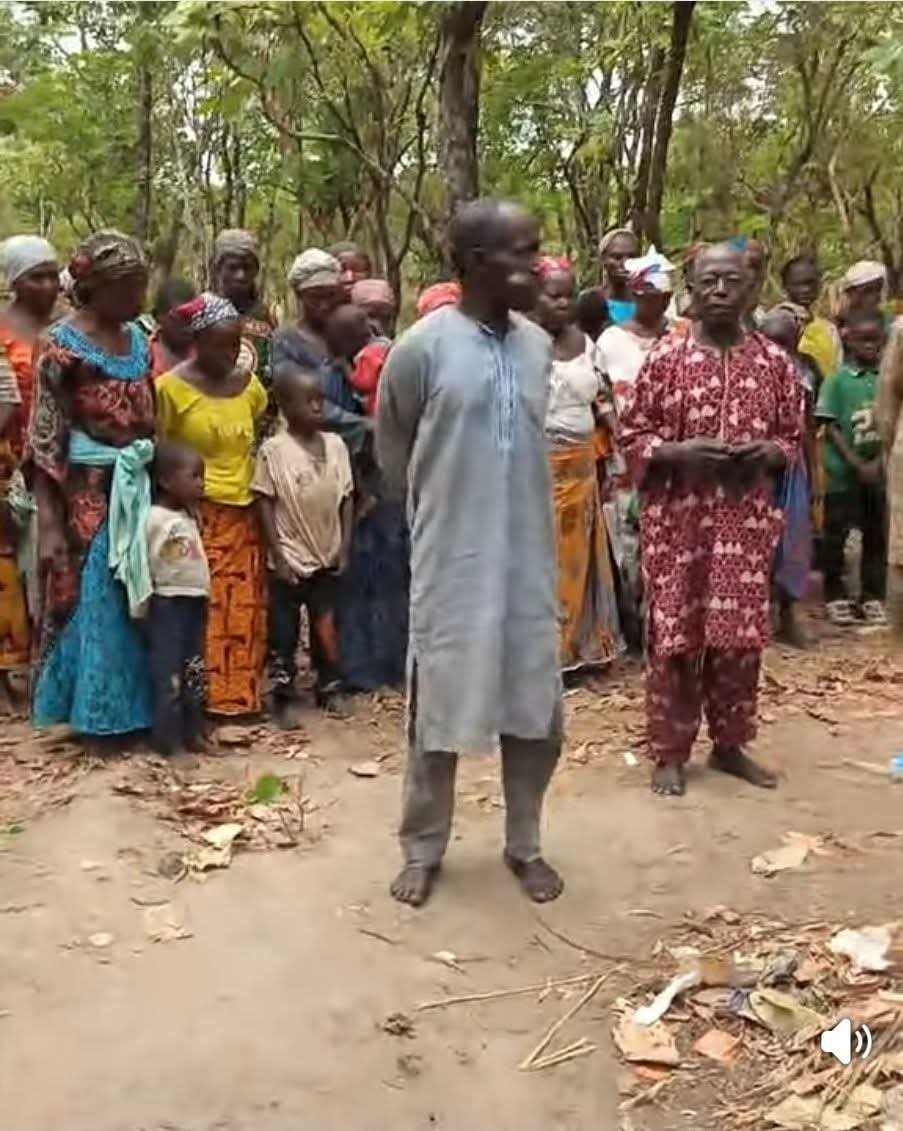
The heartbreaking account emerging from the captivity of worshippers abducted from Ariko village during an Easter church service has once again exposed the deepening humanitarian crisis caused by banditry in Nigeria.
Thank you for reading this post, don't forget to subscribe!
According to a testimony shared by Reuben Buhari on his Facebook page, one of the women kidnapped during the attack gave birth while being held in a bandits’ camp after spending nearly two months in captivity. The victims, comprising women, children, and men, have reportedly remained in the camp for 58 days under extremely harsh and degrading conditions.
A woman who recently escaped from the camp after trekking through the bush for three days recounted the circumstances surrounding the birth. She revealed that the mother was already ill and severely malnourished when labour began. With no medical assistance available, fellow female captives with traditional childbirth experience assisted in the delivery.
The witness said the women gathered pieces of unwashed clothing they had worn throughout their captivity to wrap the newborn. She further disclosed that when the bandits refused to provide any sharp object to cut the baby’s umbilical cord, one of the women resorted to using her teeth out of desperation.
According to the account, appeals for water to clean both mother and child were reportedly rejected by the captors, who allegedly dismissed the newborn’s chances of survival. The captives were also prevented from visiting a nearby stream. Relief only came when rainfall later provided water that the women used to wipe the baby with a soaked cloth.
The escaped victim said the child remained alive five days after birth, despite the absence of proper medical care and hygiene. However, concerns remained over the infant’s condition, as part of the umbilical cord was still attached.
Beyond the childbirth ordeal, the testimony paints a grim picture of life inside the camp. Captives reportedly suffer from severe hunger, skin infections, lice infestations, and a lack of basic sanitation. Children are said to drink excessive amounts of river water to suppress hunger, while women are sometimes escorted into the bush to gather leaves that serve as their only food.
The witness claimed that there were periods when captives survived for as long as five days on boiled leaves and water alone. Men in the camp were reportedly kept in chains, while bathing opportunities occurred only once every seven to ten days under the watch of armed captors.
The account also alleged that women and men were escorted in groups to nearby rivers for bathing while being closely monitored, raising further concerns about violations of their dignity and human rights.
While some aspects of the testimony remain too sensitive to disclose publicly, the overall picture underscores the immense suffering being endured by the victims and their families.
The latest revelations are likely to intensify calls for security agencies and government authorities to redouble efforts to secure the release of those still in captivity. Human rights advocates have repeatedly warned that prolonged captivity exposes victims to severe physical, psychological, and emotional trauma, particularly women and children.
As families continue to wait anxiously for the safe return of their loved ones, the story serves as a sobering reminder of the devastating human cost of insecurity and the urgent need for sustained action to protect vulnerable communities across the country.
Kindly share