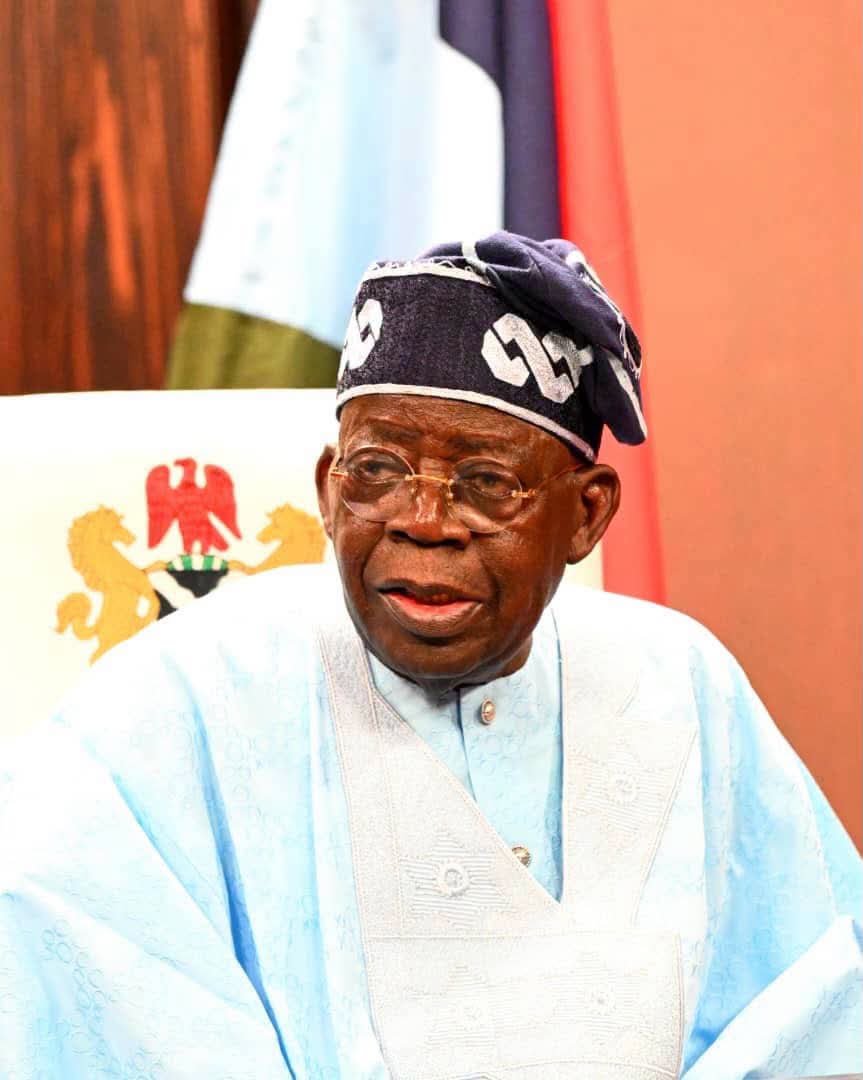
By EMTV News
Thank you for reading this post, don't forget to subscribe!President Bola Ahmed Tinubu has declared that Nigeria has moved beyond the difficult phase of economic reforms and entered what he described as an age of prosperity,” with his administration now focused on lowering the cost of living, creating productive jobs and expanding opportunities for Nigerians.
Tinubu made the declaration on Thursday, October 1, 2026, in his Independence Day address to the nation marking Nigeria’s 66th anniversary of independence. The full address was published by the State House.
The President used the national broadcast to reflect on Nigeria’s journey since independence, defend the economic reforms implemented by his administration, and outline what he described as the next phase of his government’s economic agenda.
‘The age of reform has done its work’
According to Tinubu, the difficult economic measures undertaken since his administration assumed office in 2023 were necessary to correct longstanding structural weaknesses in the Nigerian economy.
He likened the country’s economic situation to a patient suffering from cancer who must undergo painful treatment rather than merely receive medication to suppress the symptoms.
“The reforms that followed were difficult. The side effects were real. Yet, we must never confuse the medicine with the disease.”
The President argued that the reforms did not create Nigeria’s underlying economic problems but were intended to address distortions that had accumulated over decades.
He urged Nigerians not to return to what he described as unsustainable policies, saying the country must remain focused on consolidating the gains of the reform process.
Tinubu cites economic indicators
Tinubu said Nigeria’s economy had grown by more than four per cent in 2026, with both the oil and non-oil sectors contributing to what he described as a period of more stable growth.
He also cited reductions in oil theft, a substantial decline in inflation from its peak, rebuilt foreign reserves and greater stability in the foreign-exchange market.
The President further stated that Nigeria recorded more than $6 billion in non-oil export revenue in 2025, describing it as the country’s highest ever figure.
“These are not idle claims,” Tinubu said, adding that international observers, multilateral institutions and private-sector participants had seen improvements in Nigeria’s economic stability and resilience.
The State House has also recently highlighted the administration’s broader economic programme, including measures aimed at attracting investment and expanding industrial and infrastructure development.
From economic correction to shared prosperity
The President said the central task of government had now shifted from correcting the country’s economic direction to ensuring that economic growth translates into tangible improvements in the lives of Nigerians.
“Now, our purpose is simple: shared and widespread prosperity.”
Tinubu said prosperity should not be measured only through GDP figures or other economic statistics, but through practical improvements in the lives of ordinary Nigerians.
He envisioned a Nigeria where farmers could cultivate safely and profitably, manufacturers had reliable electricity, businesses could access credit, young people could find productive employment, and families could afford food, transportation and education.
Lowering the cost of living
The President identified the reduction of the cost of living as a major priority of the next phase of his administration.
He said the government would pursue this objective by reducing the cost of producing, transporting and distributing goods.
Among the measures highlighted were expanded mechanised irrigation and dry-season farming, improved access to seeds and fertiliser, increased agricultural mechanisation, investment in storage and transportation, and the development of roads, railways and ports linking farms and factories to markets.
Tinubu said the government’s approach was based on the principle that lower production and transportation costs should eventually translate into lower prices for consumers.
Jobs, industries and Nigeria’s young population
The President also placed job creation, enterprise and industrialisation at the centre of the next phase of his administration.
He said Nigeria’s large youth population represented an opportunity that could drive economic production if supported with appropriate skills, infrastructure and access to finance.
His administration, he said, would utilise Nigeria’s gas resources to power industries, support the revival of factories, expand digital connectivity and invest in skills demanded by employers.
“I want to see more Nigerians making things. I want to see more Nigerian farms feeding our cities and supplying our factories. I want to see Nigerian businesses selling Nigerian goods to the whole world.”
He also expressed his desire to see young Nigerians establish globally competitive technology companies and create employment opportunities within the country.
Social protection remains part of the agenda
Acknowledging that many Nigerians continue to face difficulties meeting basic needs, Tinubu said the government would maintain and strengthen social protection measures alongside its economic growth strategy.
He said the administration was improving the National Social Register to ensure that assistance reaches vulnerable households.
The President also cited the Nigerian Education Loan Fund, CREDICORP and continued collaboration with state and local governments in strengthening primary healthcare, basic education and other essential public services.
According to him, these interventions are intended to provide support while Nigerians move towards greater economic self-sufficiency.
“Our objective is not to manage poverty more efficiently. We will defeat it.”
Tinubu, however, acknowledged that poverty reduction would require sustained economic growth and the creation of millions of productive opportunities over time.
‘We cannot erase in four years what accumulated over generations’
The President conceded that the socioeconomic challenges facing Nigerians were the product of problems that had accumulated over several decades.
“We cannot erase in four years what accumulated over generations. But we can change its course.”
He said the administration’s task was to build an economy capable of steadily lifting people out of poverty while ensuring that vulnerable citizens were not abandoned during the transition.
The emphasis on translating macroeconomic reforms into household-level improvements echoes the administration’s recent presentation of its development programmes, including NG-CARES Additional Financing, SOLID and HOPE. The State House has described those programmes as mechanisms for converting economic stability into improved livelihoods.
‘Nigeria has corrected its course’
Looking ahead, Tinubu characterised the country’s economic journey as a transition from difficult reforms to broader prosperity.
“The age of reform has done its work. Now begins the age of prosperity.”
He said Nigerians had endured difficult years and made hard decisions together, but argued that the country should now focus on building upon the foundations established through the reform process.
The President concluded with a call for national unity and continued confidence in Nigeria’s future, declaring:
“Nigeria has corrected its course. We have passed through our own Red Sea. This is not the time to look back.”
He described the Nigeria he seeks to build as a country of abundance and opportunity, where prosperity is broadly shared and children can aspire beyond the circumstances of their birth.
“Our destination is in sight. Our foundations are strong. Our direction is clear. So let us go forward. No looking back.”
Tinubu wished Nigerians a happy Independence Day and prayed for the continued blessing of the Federal Republic of Nigeria.
Kindly share