Students across various secondary schools in Delta State have commended Sterling Oil Exploration and Energy Production Company Limited (SEEPCO) for its investment in their academic development through an innovative science education initiative.
Thank you for reading this post, don't forget to subscribe!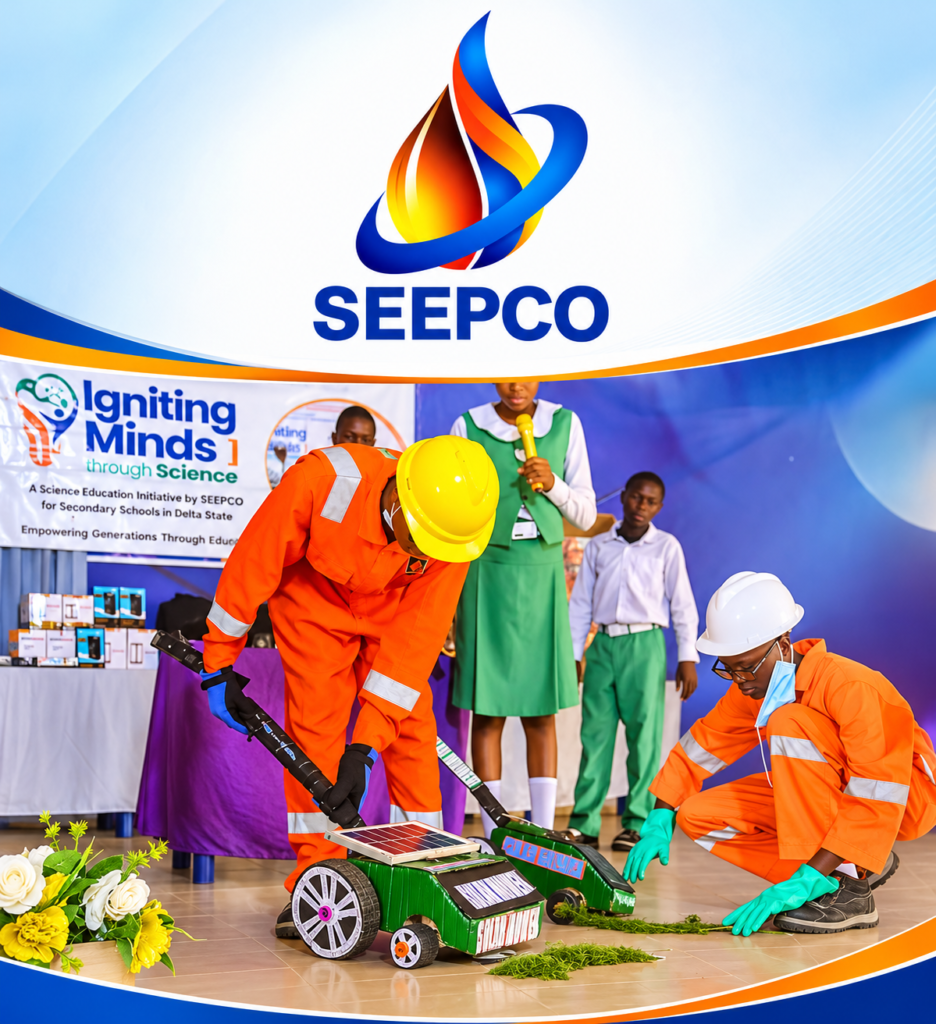
Government officials in the state have also expressed satisfaction with SEEPCO’s decision to introduce the Igniting Minds through Science (IMS) programme, designed to transform classroom curiosity into practical scientific solutions capable of addressing some of society’s most pressing challenges.
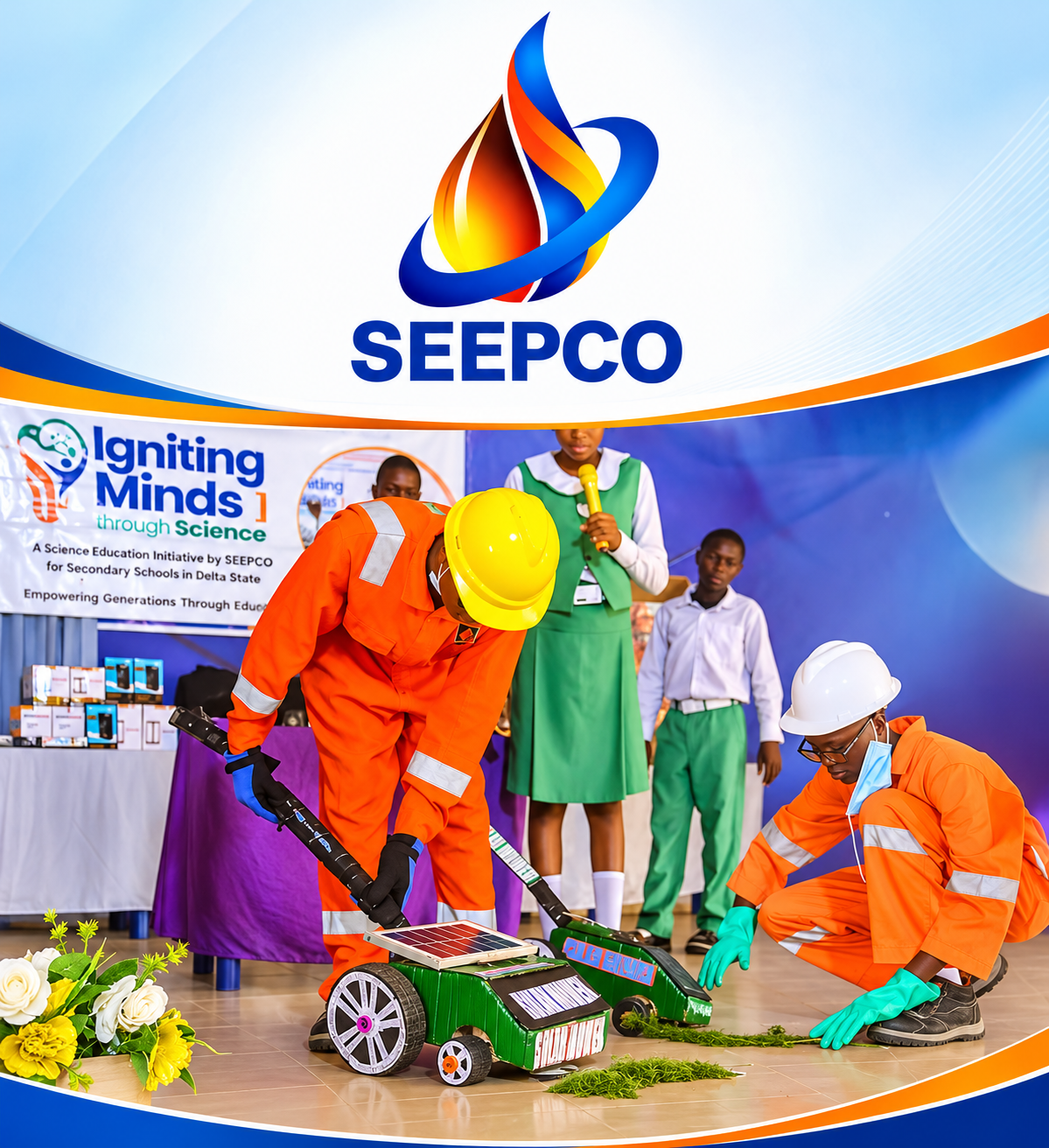
These commendations formed part of the highlights of the 2026 grand finale of the IMS Science Programme, organised in partnership with the Delta State Government and implemented by the Vcare for Development Foundation (VCDF) as part of SEEPCO’s Corporate Social Responsibility (CSR) initiative.
The programme provided participating students with opportunities to develop practical solutions to waste management challenges, explore alternative energy sources, generate electricity through innovative means, and combine creativity with readily available materials to design useful products.
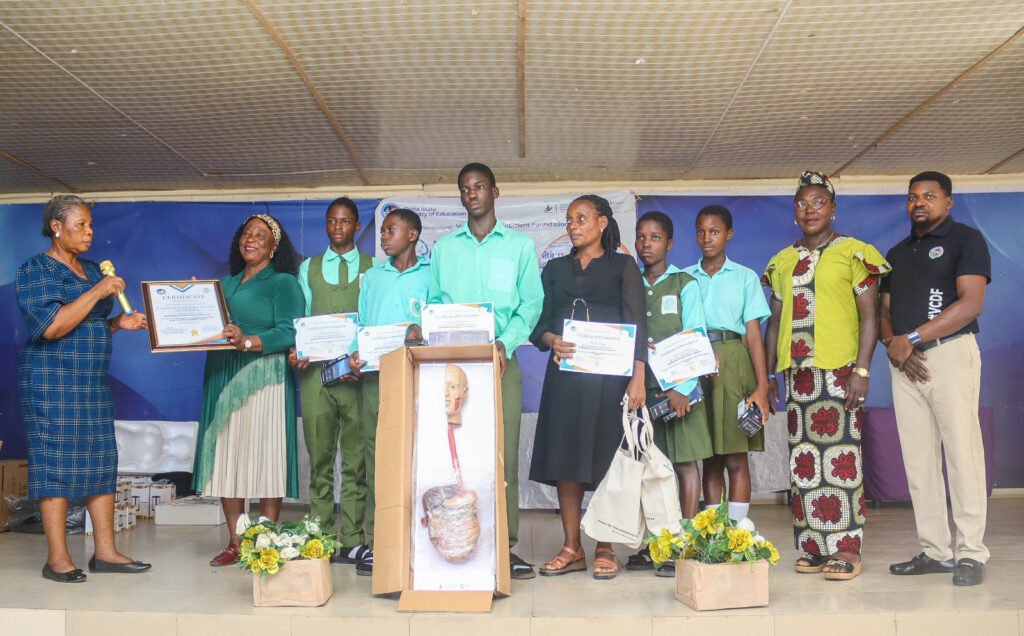
The students also demonstrated how critical thinking, teamwork and scientific innovation could be applied to real-life challenges, moving beyond classroom theories to practical applications of Science, Technology, Engineering and Mathematics (STEM).
During the preliminary stages, about 37 schools across the state presented their science projects and models, with eight schools eventually qualifying for the grand finale.
At the final stage, each of the eight schools showcased a prototype developed through research, experimentation and teamwork. The projects demonstrated how everyday materials, combined with scientific knowledge, could produce practical solutions with potential benefits for homes, schools and communities.
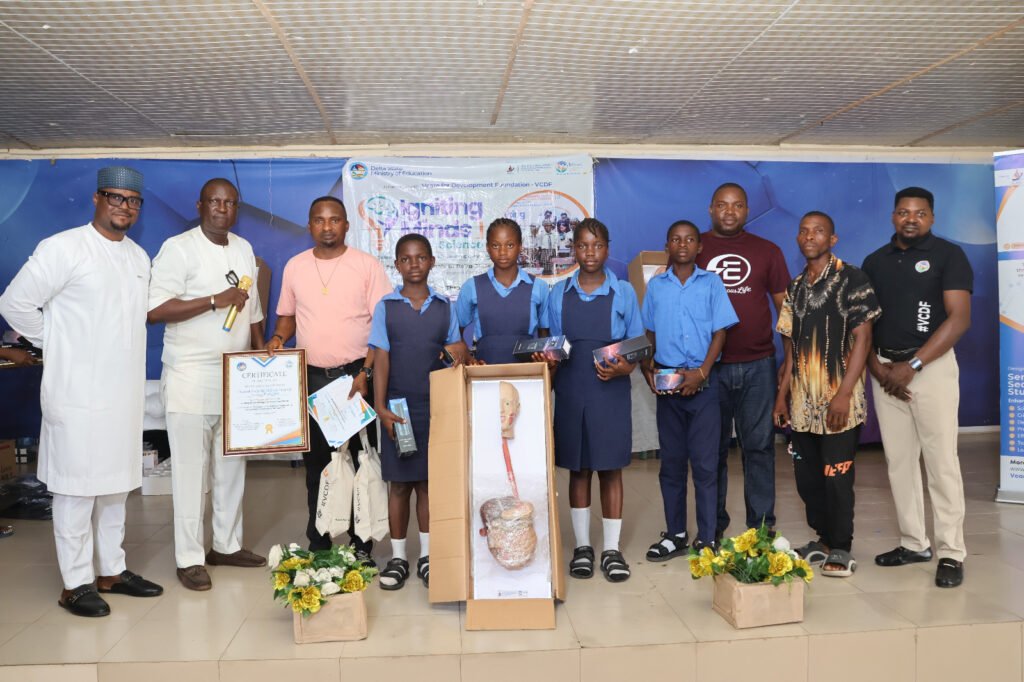
Students of Obiaruku Grammar School, Obiaruku, in Ukwuani Local Government Area, emerged overall winners with their Anaerobic Biogas Digester, a project designed to convert organic waste into biogas.
Government College, Ughelli, secured second position with its Solar-Powered Desktop Electric Fan, an energy-efficient innovation designed to provide relief from heat while addressing challenges associated with unreliable electricity supply.
Onuaboh Secondary School, Onuaboh, in Ndokwa East Local Government Area, came third with its handmade woven backpack and crochet bag, demonstrating how creativity and practical skills could be harnessed to produce marketable items.
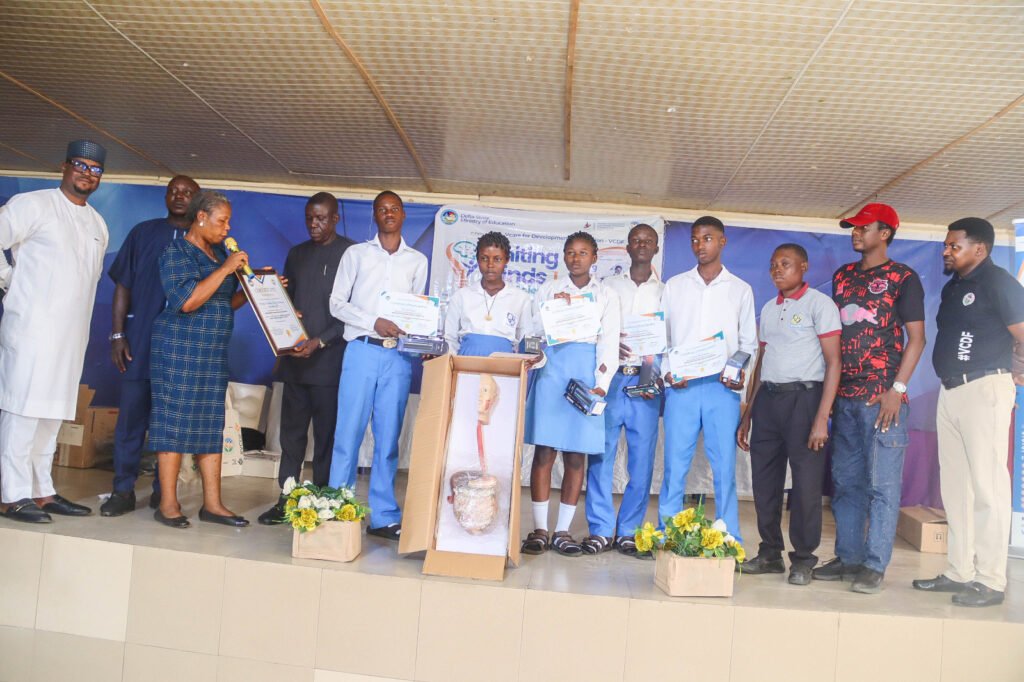
Speaking at the grand finale, one of the participating students, Chukwunonso Greatness, expressed excitement over the team’s emergence as overall winners.
“Being here and emerging first place with our project, Anaerobic Biogas Digester, is an incredible feeling. There was a point when we almost lost hope, but we are grateful that our efforts paid off. We are excited and proud of what we have achieved.
“A big thank you to VCDF and Sterling Oil Group for believing in young innovators and giving us the opportunity to learn, showcase our ideas and excel. We truly appreciate you,” the student said.
Another student from Onuaboh Secondary School said the IMS experience had strengthened their interest in science and inspired them to work harder.
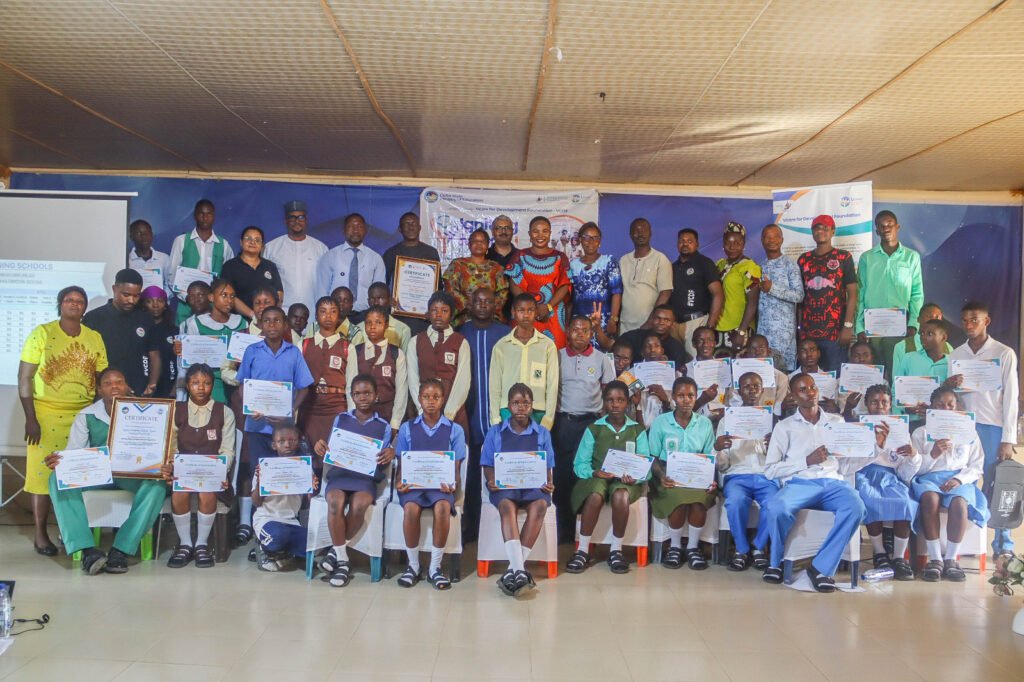
“The IMS experience has strengthened my interest in science and inspired me to put in even more effort. I am incredibly excited and grateful for the opportunity to showcase the project alongside other talented students. I thank my school teachers, Sterling Oil and VCDF for the experience,” the student stated.
Also speaking, the Chief Inspector of Education, Ministry of Basic and Secondary Education, Ndokwa West, Mrs Mercy Udi-Anighoro, expressed appreciation to SEEPCO for introducing the initiative.
She said the programme had empowered students with the confidence and practical knowledge to identify and address challenges in their communities through science and technology.
All participating schools, teachers and students received certificates and science educational materials, while the winning schools were presented with additional prizes, including human anatomy models, adult-sized human skeletons and electric compound microscopes to strengthen practical science teaching and learning.
Since the IMS programme was introduced by SEEPCO in 2023, no fewer than 612 schools across Lagos, Akwa Ibom and Delta states have participated, with approximately 26,000 students and teachers benefiting from the initiative.
Kindly share
Kindly share