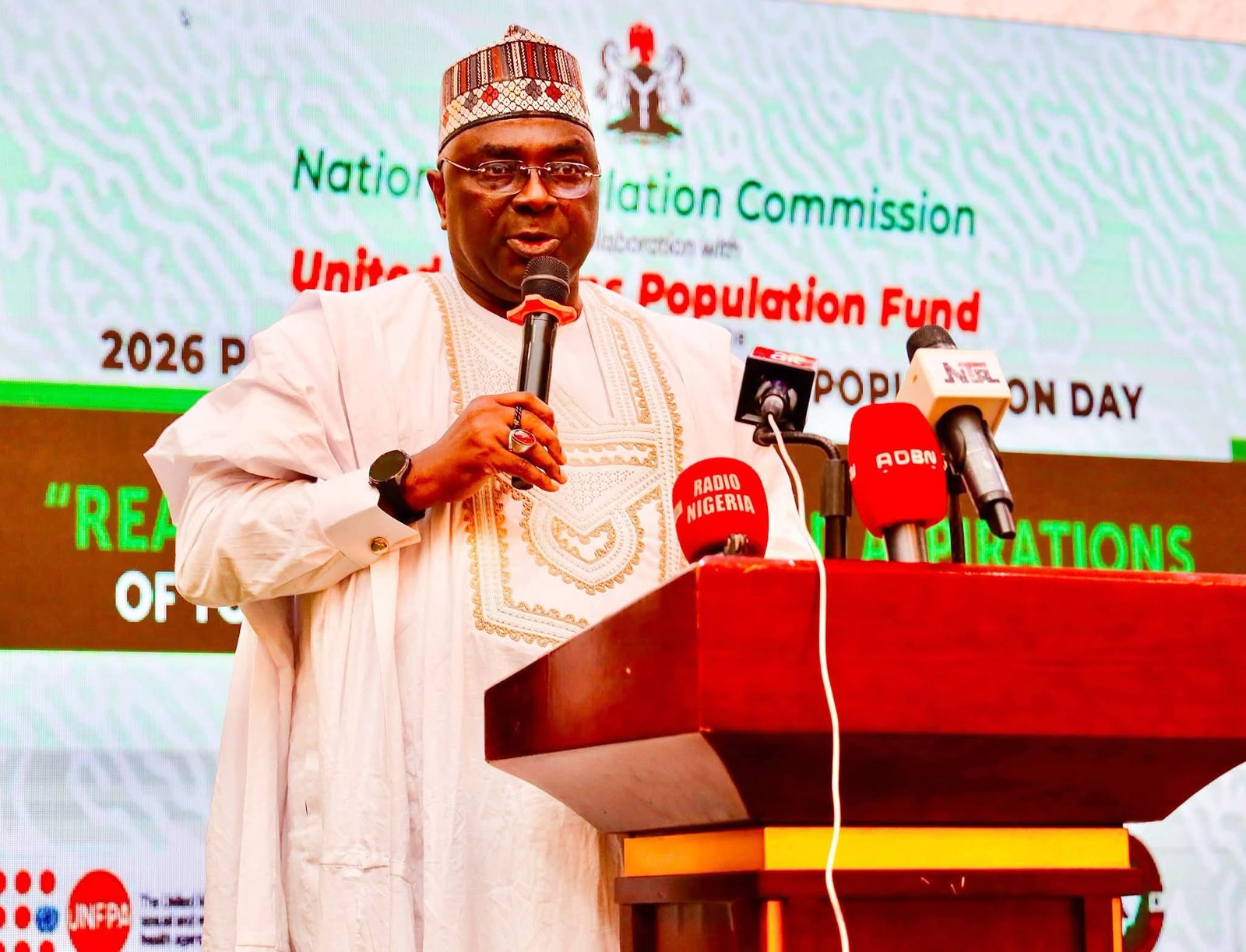
Abuja, Nigeria – The Chairman of the National Population Commission (NPC), Dr. Aminu Yusuf, has called for greater investment in Nigeria’s young population, stressing that the country’s future depends not on its population size alone but on the opportunities created for its citizens, particularly young people.
Thank you for reading this post, don't forget to subscribe!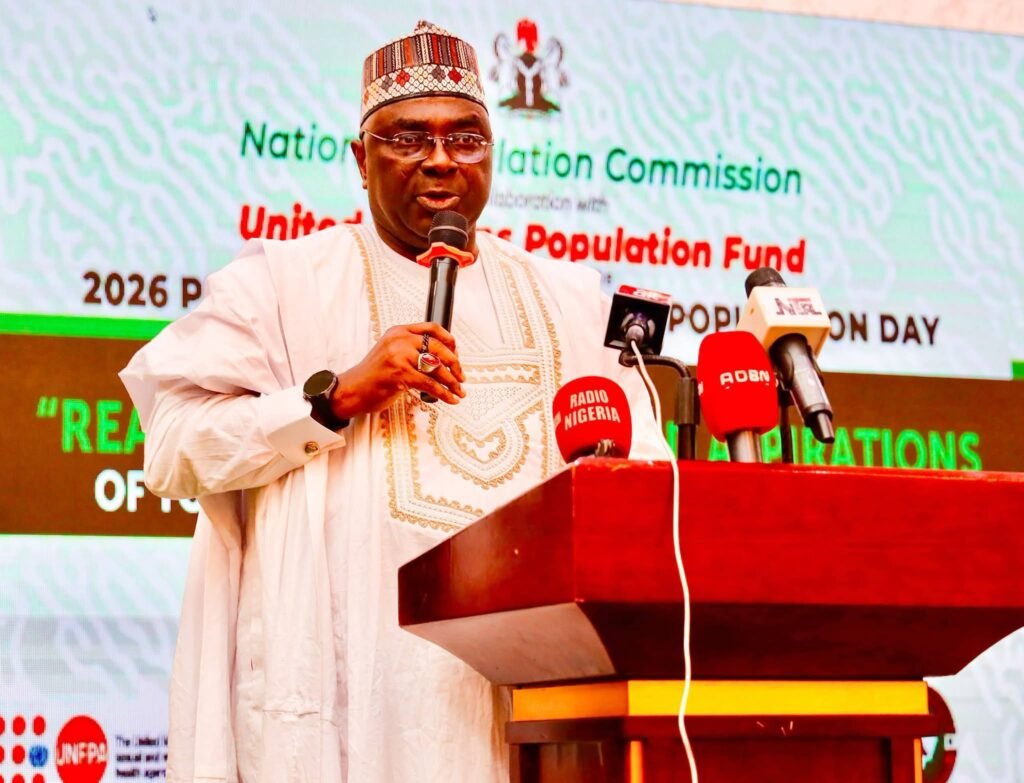
Speaking during a press briefing in Abuja ahead of the 2026 World Population Day celebration, Dr. Yusuf said this year’s global theme, “Realizing the hopes and aspirations of young people — today and for the future,” reflects Nigeria’s urgent need to empower its youthful population through education, healthcare, skills development, employment and evidence-based planning.
He noted that Nigeria, with an estimated population of 238 million people, remains the most populous nation in Africa and one of the youngest globally, with young people aged 15 to 29 accounting for about 30 percent of the country’s population.
“The future of every nation is shaped not merely by the size of its population, but by the opportunities available to its people, especially its young population. We must create an enabling environment in which young people can thrive, contribute meaningfully to national development and realise their full potential,” Dr. Yusuf said.
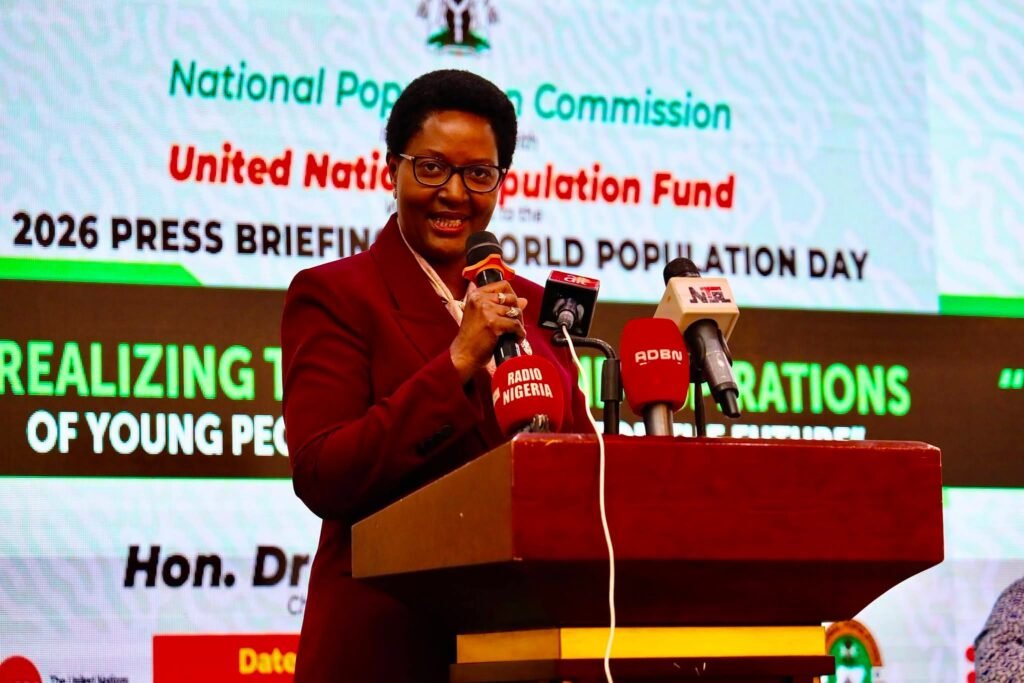
The NPC Chairman explained that the 2026 World Population Day activities would also highlight findings from the United Nations Population Fund (UNFPA) Global Demographic Future Survey, which examines how people, particularly young people, perceive demographic change and the future.
Reviewing key youth development indicators under President Bola Ahmed Tinubu’s Renewed Hope Agenda, Dr. Yusuf acknowledged progress in several areas while identifying significant challenges that still require urgent attention.
According to him, youth unemployment remains around 33 percent, while underemployment exceeds 20 percent, largely due to the mismatch between educational curricula and labour market demands, forcing many young Nigerians into informal employment.

He also noted improvements in reproductive health, revealing that Nigeria’s Total Fertility Rate has declined from 5.3 to 4.8 children per woman. However, adolescent fertility remains at 15 percent, reflecting persistent barriers to quality healthcare and reproductive health services.
Despite interventions by governments at different levels, Dr. Yusuf said Nigeria still accounts for nearly 20 percent of the world’s out-of-school children, particularly in rural and conflict-affected communities.
Highlighting ongoing federal initiatives, he said the government has expanded opportunities for young Nigerians through the 3 Million Technical Talent (3MTT) programme, under which 30,000 fellows have already been trained across the 36 states and the Federal Capital Territory.

He added that the Nigerian Education Loan Fund (NELFUND) has begun providing structured financial support to eligible students, while more than 150,000 trainees are currently enrolled in tuition-free vocational training programmes across 1,600 accredited centres nationwide.
On civil registration, Dr. Yusuf disclosed that the Commission’s modernised Civil Registration and Vital Statistics (CRVS) system and National Geospatial Data Repository are improving digital birth registration and demographic data collection across all 774 local government areas.
Despite these achievements, he warned that infrastructure deficits, economic hardship, insecurity and implementation gaps continue to limit the effectiveness of youth-focused programmes.
“We cannot plan for a population we do not accurately count. A credible, technology-driven Population and Housing Census remains the ultimate tool required to fully map, disaggregate and sustainably deploy resources for the over 60 percent of Nigerians who look to the future with hope,” he stated.
Dr. Yusuf further stressed that Nigeria has a unique opportunity to harness its demographic dividend by investing strategically in education, healthcare, job creation and human capital development.
“Our demographic realities present us with a historic opportunity. If our young people are healthy, educated, skilled, empowered and productively engaged, they can drive economic growth, technological advancement, social cohesion and sustainable development. However, this demographic advantage is not automatic. It must be earned through deliberate investments and sound public policies,” he said.

He disclosed that only seven states and the Federal Capital Territory currently have demographic dividend roadmaps, calling for accelerated implementation across the country.
The NPC Chairman also urged journalists to continue promoting informed public discourse on population issues, youth development and evidence-based governance.
“As communicators and agenda setters, your role in advancing population and development issues cannot be overemphasized. Through accurate, balanced and sustained reporting, you help shape public understanding of issues that affect millions of Nigerians,” he said.
Dr. Yusuf reaffirmed the Commission’s commitment to working with the Federal Government, the United Nations Population Fund (UNFPA), development partners, civil society organisations, academia and the private sector to improve the well-being of Nigerians.

He announced that activities marking the 2026 World Population Day would include media engagements, youth-centred advocacy programmes, public awareness campaigns and stakeholder consultations designed to amplify the voices of young people across the country.
“The message of this year’s World Population Day is clear: the hopes and aspirations of young people deserve our attention, our investment and our collective commitment,” Dr. Yusuf concluded.
Kindly share