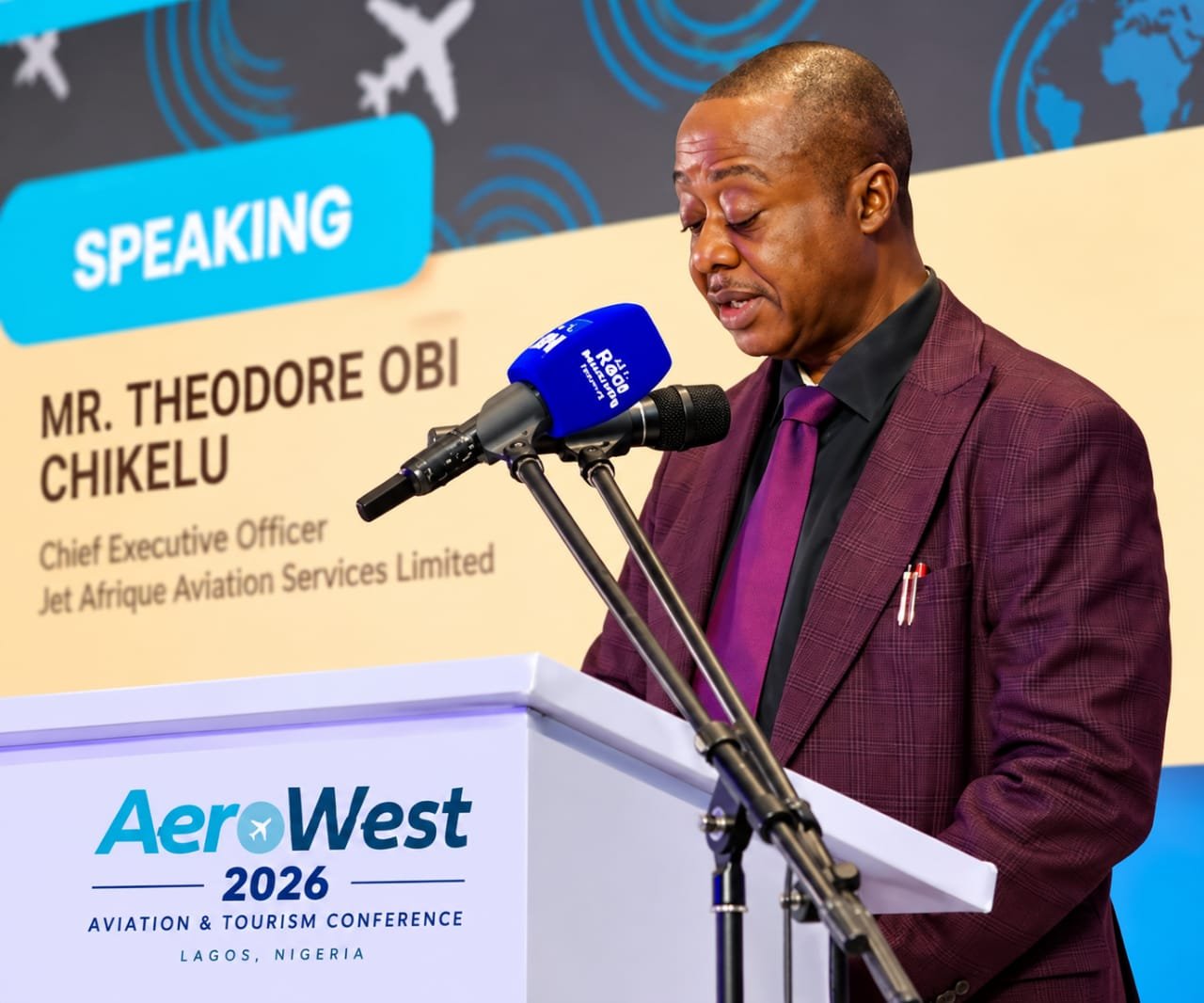
LAGOS — The Chief Executive Officer of Jet Afrique Aviation Services Limited, Theodore Obi Chikelu, has called for stronger regional cooperation, increased investment and regulatory reforms to unlock the full potential of aviation and tourism in West and Central Africa.
Thank you for reading this post, don't forget to subscribe!
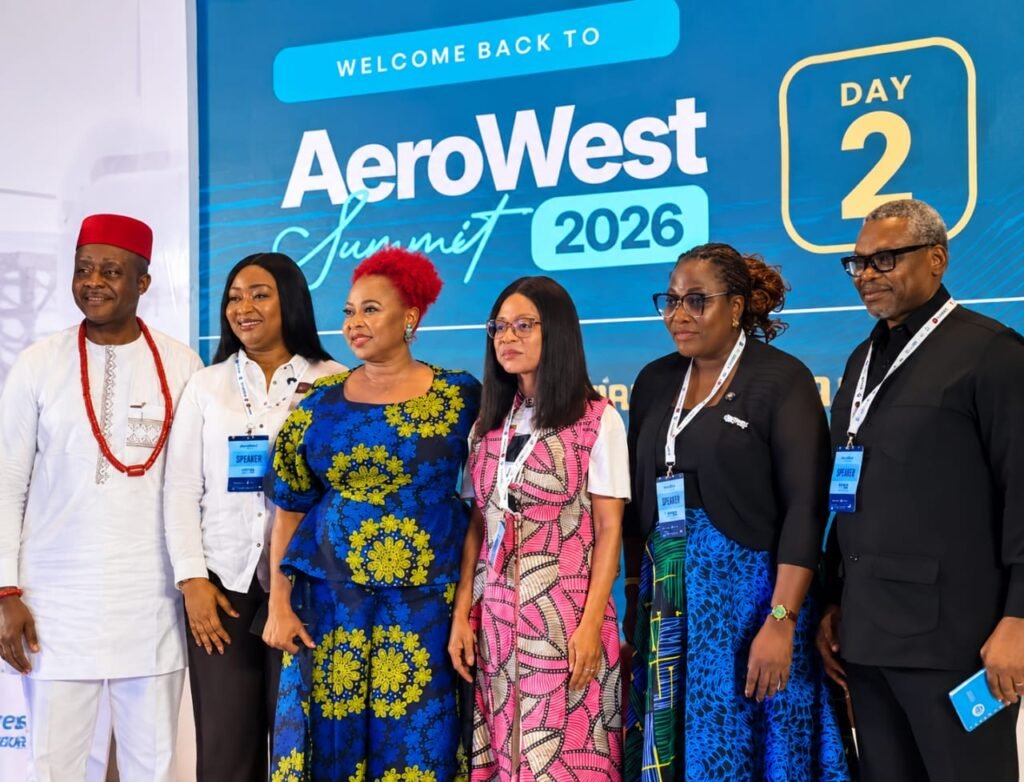
Chikelu made the call while welcoming delegates to AERO WEST 2026, an Aviation and Tourism Conference held in Lagos, with the theme: “Financing Connectivity and Unlocking Aviation and Tourism Growth in West and Central Africa.”
Welcoming government officials, diplomats, aviation and tourism executives, investors, development finance institutions and other stakeholders, Chikelu described the conference as a timely platform for addressing the structural challenges limiting growth in the two interconnected sectors.
He noted that West and Central Africa, with more than 20 countries and over 400 million people, possesses enormous cultural, natural and economic assets, but aviation and tourism are still operating significantly below their potential.
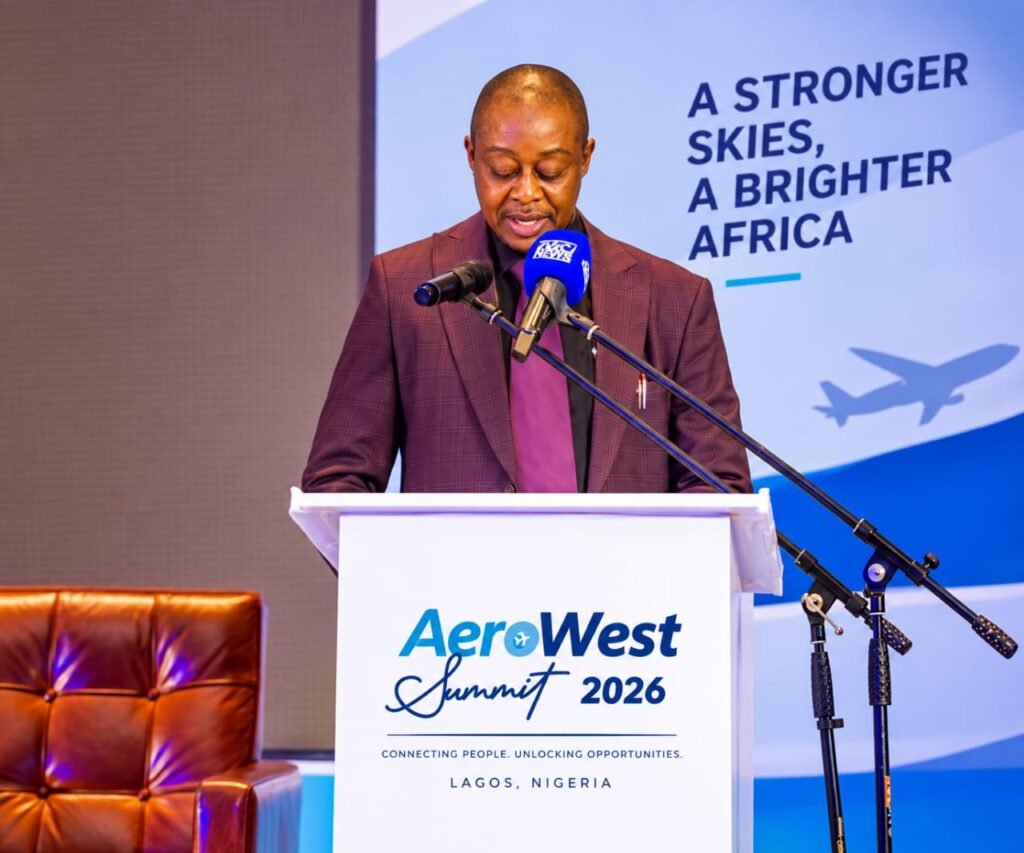
“For too long, these two sectors have operated in separate silos across our regions, despite being two sides of the very same coin,” Chikelu said.
According to him, sustainable tourism development depends on safe, affordable and seamless air connectivity, while airlines equally require attractive and accessible destinations capable of generating passenger demand.
Connectivity Gap
Chikelu said African aviation currently accounts for less than three per cent of global air traffic, despite the sector’s critical role in transporting high-value, time-sensitive trade and people within the region.

He identified inadequate connectivity as one of the industry’s greatest challenges, noting that fewer than 30 per cent of more than 400 possible city pairs across ECOWAS and ECCAS are served by direct flights.
He, however, pointed to signs of progress, including compliance with the Cape Town Convention, new bilateral air service agreements and financing initiatives aimed at transforming African aviation.
But operating costs remain a major concern, with jet fuel, taxes and aircraft leasing costs estimated in the address to be significantly above global averages.

Tourism Potential
On tourism, the Jet Afrique CEO said the sector contributes more than $18 billion directly to the GDP of West and Central Africa and supports millions of jobs.
He highlighted the region’s UNESCO World Heritage sites, beaches, cultural festivals and business centres as major assets capable of attracting visitors from around the world.
However, he said visa restrictions, inadequate hotel capacity and weak last-mile transportation infrastructure continue to undermine the region’s tourism potential.

“Tourism cannot grow if people cannot move freely,” he stressed.
Infrastructure and Regulation
Chikelu also called for greater investment in airport infrastructure, aircraft maintenance, repair and overhaul facilities, reliable electricity, roads and digital payment systems.
He described regulatory harmonisation as another critical area requiring urgent attention, advocating full implementation of the Single African Air Transport Market (SAATM).

He called for harmonised taxes, charges and consumer protection regulations, as well as greater alignment of visa policies.
According to him, a single regional visa could significantly increase intra-African travel, while policy stability would give investors the confidence to commit to long-term aviation and tourism projects.
Safety and Airspace Management
Safety, Chikelu said, must remain at the heart of aviation development.
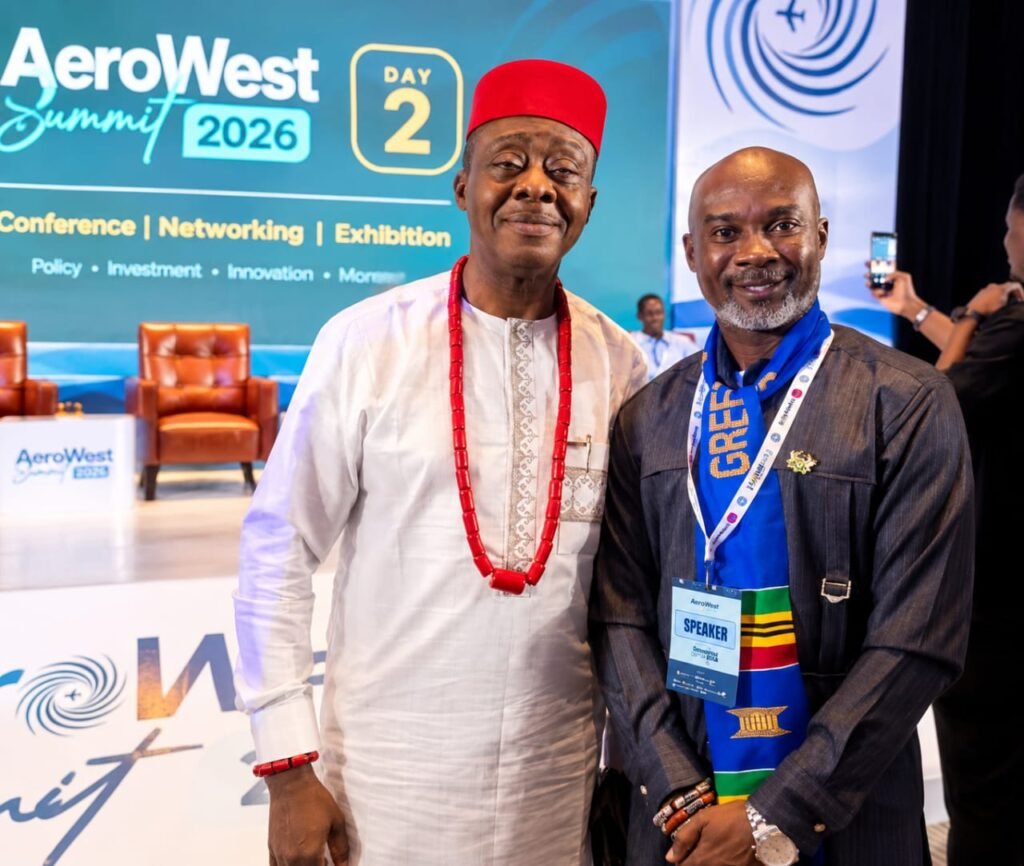
“Safety is our licence to operate,” he declared.
While acknowledging progress recorded through International Civil Aviation Organization audits, he said gaps remain in areas including regulatory oversight, accident investigation and runway safety.
He further advocated a seamless West and Central Africa Upper Airspace Block, arguing that improved airspace management could reduce flight times, operating costs and emissions.
Unlocking Economic Opportunities
Chikelu emphasized the wider economic significance of aviation and tourism, citing estimates that every dollar spent on air transport generates $3.50 in economic activity, while every one million tourists creates approximately 80,000 direct and indirect jobs.
He projected that doubling intra-regional connectivity by 2030 could unlock an estimated $45 billion in GDP and two million jobs across West and Central Africa.
Against this backdrop, he said AERO WEST 2026 was designed to move beyond discussions and generate practical investment opportunities.

“AERO WEST exists to turn diagnosis into deals. This is not just another talking shop—it is our collective regional control tower: a launch pad for strategic partnerships, cross-border investment, and the policies that will redefine our airspace and our economy,” he said.
Three-Point Commitment
As the conference commenced, Chikelu urged participants to focus on three key commitments: financing connectivity, standardising regulations and marketing destinations.

He said the gathering should produce tangible outcomes in the areas of fundable infrastructure, bankable air routes and investable tourism destinations.
“The skies are open. The stories are ready. The opportunity is now,” Chikelu declared.
He welcomed international delegates to Nigeria and encouraged participants to use the conference to build partnerships and experience Nigerian hospitality.

Chikelu concluded by expressing confidence that AERO WEST could contribute to creating a stronger, more united and seamlessly connected West and Central African aviation and tourism ecosystem.
“Let us use this platform to build the stronger, more united, and seamlessly connected West and Central Africa our people deserve,” he said.
Kindly share