By EMTV News
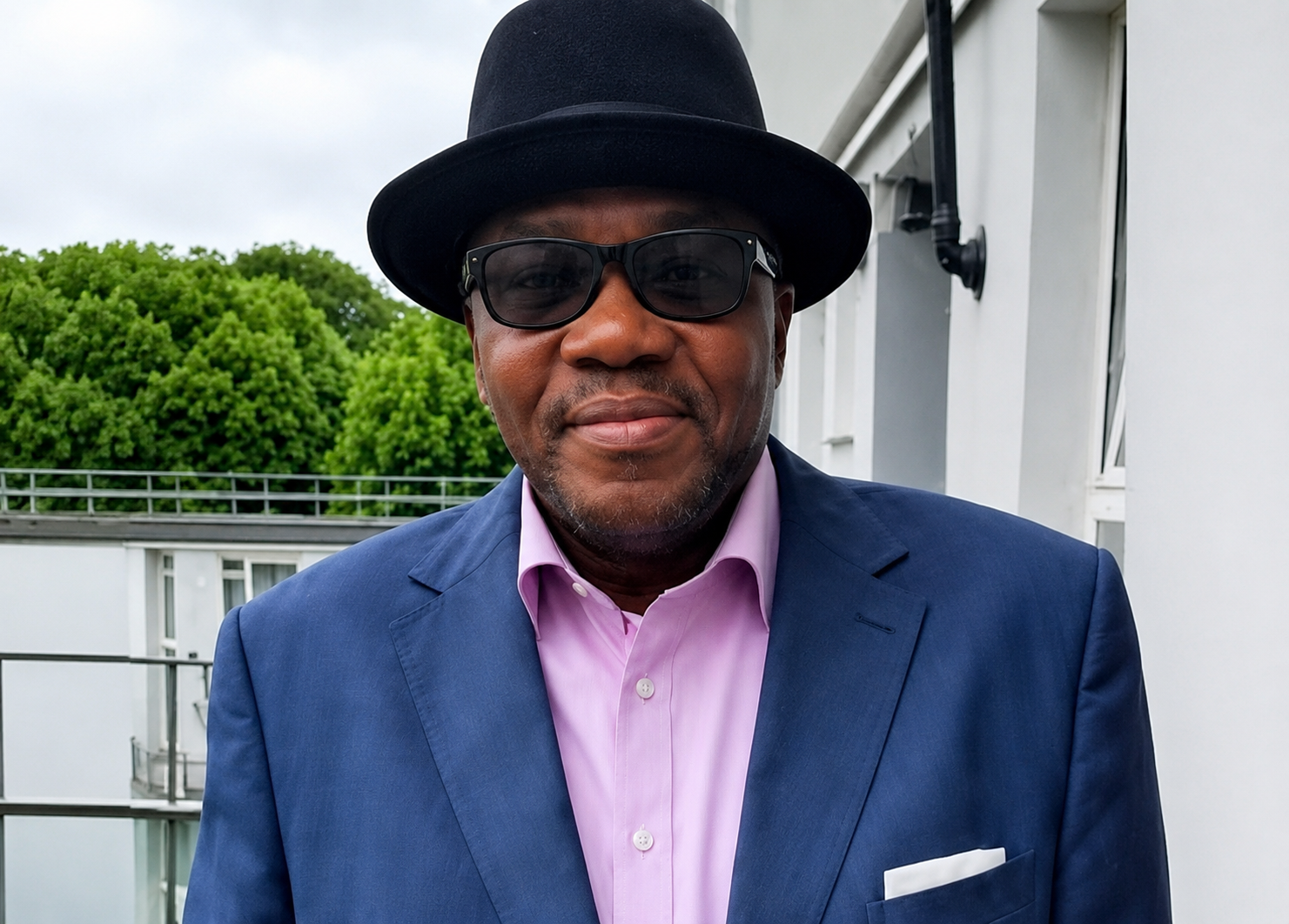
Thank you for reading this post, don't forget to subscribe!Ambassador Godknows Boladei Igali, OON, Ibetariowei of Izonland, a former Nigerian Ambassador to Sweden, Denmark, Norway and Finland, and a retired Federal Permanent Secretary, has called for urgent intervention to address the deteriorating road infrastructure across the South-South region.
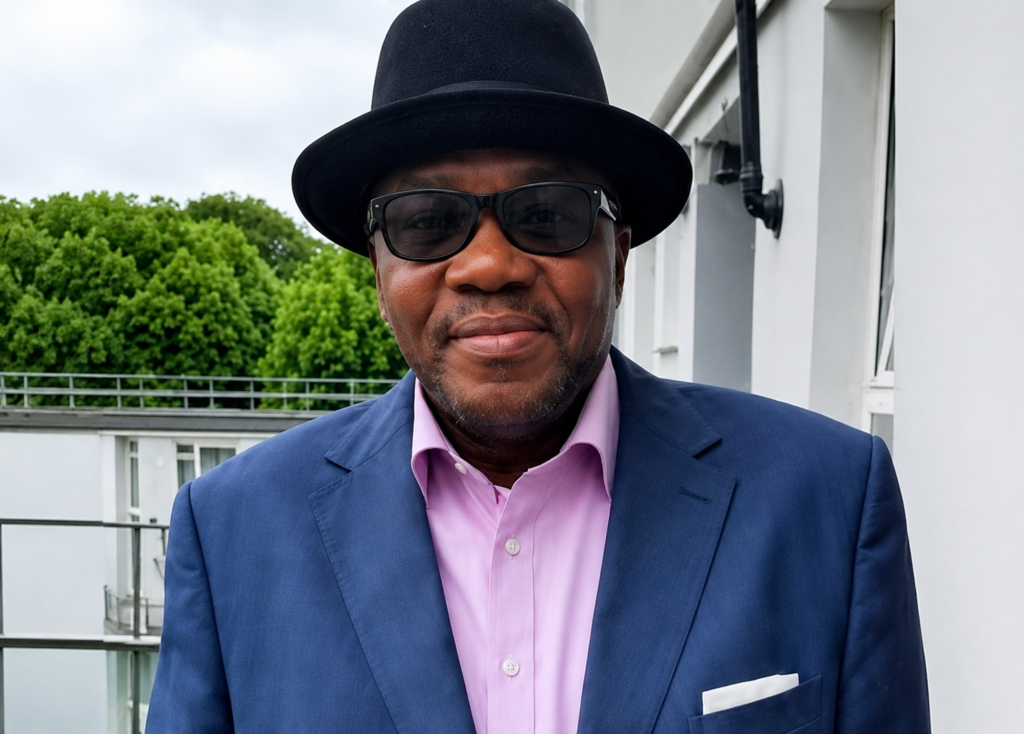
Igali, who is currently the National Chairman of the Pan-Niger Delta Forum (PANDEF), also advocated greater fiscal federalism and stronger collaboration among sub-national governments to address infrastructure and other developmental challenges.
He spoke during an interview on “The Morning Brief” programme of Channels Television.
Excerpts:
Channels Television: Ambassador Godknows Igali joins us from our Abuja studio. Good morning, sir. Welcome to The Morning Brief.
Igali: Thank you very much. Good morning.
Channels Television: Just before you came on, we were quipping about your first name, and I was wondering whether you could tell us what God knows about the future of Nigeria. Perhaps we could all get some comfort this morning.
Igali: Well, it will be well. It will be well. It will be well. Nigeria is safe in the hands of God.
Channels Television: That’s comforting. As we wait for what will be well, let’s talk about the South-South. Give us a sense of the state of the roads that PANDEF is concerned about and how they are impacting the quality of life and businesses in the South-South.
Igali: Once more, thank you very much. Let me just correct an impression. I am not the founder of PANDEF. I’m nowhere close to that. PANDEF was founded by the traditional rulers, political leaders and elders of the entire South-South about 10 or 11 years ago. So, I just find myself to be the National Chairman at this time.
I would say that we have reached a situation where the South-South is almost cut off from the rest of the country, and internally, we cannot commute among ourselves.
Fortunately, the Minister of Works, Engineer David Umahi, was yesterday in Benin, and he spoke very eloquently. He spoke out of disappointment with the concessionaire and the contractor they brought on board.
So, the fact speaks for itself. If I had known that the Minister would have spoken so well, I wouldn’t have bothered to accept the very kind invitation to talk about it.
For some months, we’ve been lamenting and speaking on this matter. We’ve been warning because, as somebody heading an organisation that represents the interests of the people of the South-South, I am under a high compulsion to travel by road almost on a weekly basis for different activities in different states. We don’t have a rail system connecting us, nor do we have any other form of transportation that adequately serves the region.
Therefore, I know the exact state of the roads. I have spoken out so many times that we’re getting to a point where the South-South will be cut off from the rest of the country.
Let me tell you, the Minister has made it very clear that the contractor and the concessionaire, in this case, were obviously incompetent.
I remember an allegory that one of Nigeria’s leading scholars and jurists, Prince Bola Ajibola, with whom I had the great privilege of working very closely at one stage in my public service, once gave.
He said, “Look, you have a situation where you have the bone of a chicken and the bone of an elephant to eat. If you choose to eat the bone of a chicken, you eat it well and finish it. But when you eat the bone of an elephant, all your teeth will go off because you won’t be able to chew it.”
That’s the situation I find with this contractor and concessionaire. He is in a Gordian knot because he expressed frustration over the fact that rains were falling.
Listen, that’s not an excuse at all in this case because, if you go down just very close by, cross over and go to Delta State, the governor is constructing flyovers and roads in Ughelli, Asaba and Warri. It is the same terrain, the same area, and the contractors are working. In fact, people have started using the roads.
So, saying that there is rainfall is not an issue. Yes, you would have known from the beginning that this area has the highest level of rainfall. The water table is very high, and sometimes it is marshy in some places. So, the contractor had no competence at all.
But then there is another problem, which I found out. Maybe I’m jumping the gun. That problem is the issue of funding. And in this case, it’s a concession, so I wouldn’t say that definitively.
But when I move around and don’t see enough work—for example, if you go from Port Harcourt towards Bayelsa and then on to Delta State—you travel on one side for about four kilometres, then you cross to the other side for five kilometres, and then you cross again to this side for about one kilometre. It’s zigzag, zigzag.
The roads are terrible.
When we interact with the contractor, they say, “Well, you don’t see the amount of work.” At the time, people felt that people were just criticising the government. No. There is a need for greater supervision.
How did we get to this kind of condition?
That is the same thing if you want to go today from Benin to Sapele. For those who are familiar with that road, it used to be a 45-minute journey. You pass through and get to Sapele. Now, at Mosogar, you can’t pass.
I tried to go there and turned back, even during the fifth coronation anniversary of the Olu of Warri. Some of those who tried to go through the Benin axis turned back because, on the final day, it was impossible to continue moving.
If you go, for example, from Benin towards Ore, once you pass Okada in Edo State, the road is so bad that people spend days on the road.
So, I think what we have seen in the case the Minister witnessed yesterday is that there may be a need for a more comprehensive and holistic overview of the concessions and the state of the work being done by the contractors.
We’re not crying wolf. It is real.
You see equipment and some level of work, but not much progress is being made.
So, we were happy at the response. The fact that you have the Minister, the National Assembly, the NDDC, presidential advisers and others responding shows responsiveness. But I think it should be escalated to all other areas where there are concerns.
Look, for example, at the area they call Eleme Junction in Rivers State, from Eleme Junction to Onne, where they call Trailer Park. It is so bad—so bad—that I was caught up there for four hours, and this was Wednesday last week.
And I asked the question: What is going on? This is the area that produces the wealth of this country. Why should we go through this?
So, my dear, I think good work has started. The Minister has done well. He was visibly angry. He was visibly upset.
I don’t know where to place the blame. The blame first, yes, is on the incompetent concessionaire.
Maybe the civil servants are doing their work, but nobody is listening to them, because the engineer who spoke obviously knows his onions. I think people back at the headquarters should listen to them because civil servants don’t talk much. They must be sending their reports.
But why did we allow the roads to get to this stage?
Channels Television: Ambassador, if we look at—I don’t know, but listening to the Honourable Minister, it’s almost self-indicting. His words were—I want to pick his words now—“You manipulated the process.” That’s what he was telling the concessionaire. Now you have the job; you lack technical competence.
It’s either two things: either the Minister doesn’t have his hands on that project, or he was arm-twisted to give that contract to that company, because it’s self-indicting.
And he talked about the Environmental Impact Assessment. We can come to the coastal road and the debate we had with them about the lack of transparency in the process, the bidding process. He was here with us, and that debate went on about the cost and the bidding process, which was not as clear as crystal.
Well, they’re grandstanding their position. When did the EIA come out, even for the coastal road?
The reason I’m saying that is because people are alluding to the fact that there are certain roads, maybe in the Niger Delta, that are not given as much priority as some other roads in the region.
So, it’s not just about him expressing anger. Are we not supposed to question the rhetoric he used as to how the man got the job in the first place, and how it became a public embarrassment?
He’s talking about the process through which the person got the job, and even the technical competence of the individual involved. I don’t know whether you get my drift.
Igali: Yes, yes, absolutely.
Channels Television: And that’s why I drew the parallel with the Lagos-Calabar Coastal Highway and this one. The Lagos-Calabar Coastal Highway generated a lot of criticism over the process, the bidding process, which was not as open and competitive as it should be, and the EIA. But now look at how he’s treated for these other roads.
Igali: Well, let me say that I believe the Minister spoke sincerely. He was obviously very upset. I’m not his media person to speak for him, but it’s obvious that something is wrong, and that’s why I started with that allegory of somebody eating the bone of a chicken and trying to chew the bone of an elephant.
That contractor was obviously incompetent to be talking about torrential rain. Are we having a hurricane, or are we having a tsunami, or what? Other contractors are working in the area.
State governments are doing roads. Go to Bayelsa State; the state government is doing so many roads. Go to Rivers State; the state government is doing so many roads. Even the NDDC has been doing a lot of remedial work, and they are going on.
The problem, yes, was obviously funding, because the Minister came with the Bill of Quantities, and the contractor was… I sympathise with him, but it is indefensible. He took on something bigger than himself. It is obvious, and I think there’s a need for them to review the contractors.
I kept complaining about the East-West Road, which is supposed to run from Oron right down to Effurun in Delta and going up to Benin.
I kept complaining that I don’t see work going on. Like I said earlier, I have the very tasking responsibility of attending so many activities around the region, which, thank God, in my retirement, I can do for our people.
And I see that there is no work going on. There are contractors that are not working.
You travel from Ughelli to Asaba. Look at the work that Delta State Government has done. And, as I said earlier, see the amount of work going on in Warri and Ughelli. Even the NDDC is doing a lot of remedial work, and it is going on.
So, I think the Ministry of Works has to go back and review, number one, the competence of the people doing these jobs. We’re not just complaining, but it’s the truth.
Number two, is work really going on?
If the civil servants, the controllers and technical supervisors write reports, these reports should be studied and attended to. You don’t wait until hell is breaking loose before we begin to cry.
But, Minister, you’ve done well by coming to apologise. What else do we want from him? If a Minister of the Federal Republic says, “I’m sorry, I take responsibility,” it’s okay.
We have asked our youths and our people to be patient. The Minister has brought words from the President that he has a marching order to fix everything, not only in Delta State or Edo State, but all over the Niger Delta.
We have been crying. Even Senator Oshiomhole joined and spoke out loud, and it is the truth.
If you go from Benin towards Ekpoma, once you go a little bit and get to Ekpoma, it becomes impassable again, and you have to waste many hours before you can pass.
So, all over, it is a very serious situation, and we want it to be noted.
We are not asking that only roads in the Niger Delta should be attended to. We know the country is large and the responsibilities are very high. But how fair and how just is it that where the wealth is coming from, the roads are in such a terrible condition?
What are we talking about?
The roads are so bad that they are affecting economic life, social life and the ability of people to commute among themselves.
So, I think the Ministry has to review some of its processes, and the Minister has taken responsibility. Let us allow him to proceed and give him the chance to correct these things.
Channels Television: The chance to correct these things. The pushback from the government is that it has very little fiscal breathing room in terms of the availability of funds to carry out some of these projects.
The Minister will always argue that they have a presence in about 27 states, working on infrastructure. But then again, I mean, this Minister…
Igali: I’m sorry, you are raising the flow of my blood because, more than a month and a half ago…
Channels Television: Maybe I can… let me finish.
Igali: Let me help you.
Channels Television: Okay, go ahead. Go ahead.
Igali: About a month and a half ago, we held a press conference where we called the attention of Mr President to the fact that ₦3.9 trillion worth of contracts, according to the post-Federal Executive Council briefing by the Ministers, was for roads.
Twenty-seven roads were awarded, because you mentioned 27 sites, and there was none in the Niger Delta. The only one was a road connecting Cross River and Benue states, and we lamented that this is not fair to us.
This is where we contribute significantly.
That’s why I’m sorry I hurried to interrupt, because we raised the alarm that you are doing roads everywhere.
Look, we sit down in our palaces and offices in the Niger Delta and see new roads taking off everywhere—₦200-something billion, ₦300-something billion.
Then the goose that lays the golden egg is made to starve. It is unconscionable.
Channels Television: So, Ambassador, I was just going to ask, because if the government argues that they have a presence in 27 states, and then there are the historic landmark projects—the Lagos-Calabar Coastal Highway, Sokoto-Badagry Expressway, Abuja-Kaduna-Zaria-Kano Highway and the Ibadan-Ijebu-Ode Highway as well—do you think the government is biting more than it can chew?
And my second question would be: You said that the governor of Delta State has a lot of work ongoing, but the governor of Edo State, who is promising to give Tinubu 2.5 million votes, is right there in that same state, and millions of Nigerians have had to go through nightmares, while the governor is there.
So, in terms of the sub-nationals, whom we hear are having more money now, is there something else they could also be doing differently?
From Akwa Ibom to Cross River State as well, many Nigerians who are resident there prefer to go by water now, despite the security challenges, because of the state of the road.
From Akwa Ibom to Cross River State by road should take nothing less than 40 minutes. But Nigerians have decided to go by water, despite the issues around piracy and militancy, because of the man-hours spent on a journey that should perhaps take 40 or 45 minutes.
Igali: Okay, thank you very much.
Let me also mention the fact that I have not laboured on specific roads. Like I said, it is almost a state of emergency around the entire South-South.
We used to travel from Calabar to Uyo in less than one hour. Now it takes about four to five hours to commute. And, like you rightly said, people go by water.
Are the state governments, the sub-nationals, doing something, including the governor of Edo State?
In fairness to the governor of Edo State, we have watched him closely. I am not his media aide or here to speak for him. He can speak for himself. He has done well. He’s trying to do some remedial work, especially in some of the areas that were very bad.
And all the other governors.
Look at the governor of Bayelsa State. He’s building the road from Nembe to Brass, which is almost entirely over water, with bridges. And it is being built.
My local government, Southern Ijaw Local Government Area, the highest oil-producing local government in the country, had no road at all. For 17 years of oil production, I only travelled to my community, where I was born, called Oporoma, by water.
Now, the governor has connected us, and the road was commissioned early this year.
So, the sub-nationals—the governors—are doing their best.
Mind you, the Niger Delta is a very difficult terrain.
You spoke about the fiscal situation in terms of money. Please, let us face some facts.
If the wealth of this country comes from that area, it’s good that we do all roads in the country and that there should be proper interconnectivity.
In fact, I congratulated the Federal Government for trying to do 27 roads at once to open up all corridors in the country so that we can commute among ourselves.
But where we must prioritise, it is not too much to expect. It is a very reasonable minimum.
In fact, in the area where the wealth of this country comes from, you have to give some priority to us.
Is it when the oil is finished that you will now say, “Oh, you are not contributing enough”?
So, please, I don’t take that.
Because how many weeks or days of oil production will fix all the roads in the South-South?
If there was proper fiscal federalism, like in the First Republic, where you keep 50 per cent of what you have, like what the governors of the South-South are now doing on their own, they would not be begging anybody to come and do federal roads. They would do all these roads themselves as much as they can.
But in a regime where we are operating a constitutional order in which everything depends on Abuja, we have to still call on the Federal Government to prioritise this area.
Our people are not happy. Let nobody be deceived. Our people are not happy. They are watching. They are looking.
The suffering is too much, and it is something that needs to be given urgent attention—the roads in the South-South of this country.
It’s good to attend to all the rest of the country, but the money is there because this is where the money is coming from. It’s the goose that lays the egg. Feed that goose.
Nigeria can increase its oil production. Let me say this clearly: We were doing two million barrels before. We can go even up to three million barrels of oil production.
We have the capacity. We have the endowment.
If the people of the area are very happy, working together with the Federal Government and the sub-nationals, we can do that. They can increase, jack up substantially, what we produce and make money for the country.
But let the areas be made happy. Let the infrastructural situation of the country, particularly the area, be looked into.
Let me just mention, by the side, that Mr President went to the United Kingdom on a very successful state visit, which had not held in a long time, and we all applauded him.
He signed an agreement facilitating £746 million, about one billion dollars, to repair ports. The ports were only Tin Can and Apapa.
What of Warri Port? What of Port Harcourt Port? What of Calabar Port? What of Onne Port?
No port in the South-South.
The ministers in the Ministry of Marine and Blue Economy, the Minister of Finance, our Chairman of the Board of Trustees of PANDEF, Obong Victor Attah, and myself addressed letters to these ministers.
It’s good that we are repairing these two ports, but remember that there are also ports in these other parts.
How do you make that kind of situation? How happy will we be?
So, that’s why I’m saying we are not happy because we feel left out.
Channels Television: Ambassador, in your last commentary, you mentioned the fact that the South-South lays the golden goose and is being neglected, and that’s a very valid point to make.
But I’m looking again at the scorecard presented by the administration only days ago. Of the ₦15.8 trillion subsidy savings, the sub-nationals are said to have received ₦6.5 trillion.
Now, the South-South states will also get derivation funds, but time and again in our recent history, the sub-nationals often hinge their inability to provide intervention on federal highways on the fact that it is the responsibility of the Federal Government.
But if they have had so much funding, especially since the removal of subsidy, have the results in the states justified what we’re seeing?
Should we excuse the state governors for building highways and bridges where they are not needed, while industries and people are suffering?
The drivers are saying they have spent four days on the expressway. They haven’t seen their families.
Should we continue to excuse the sub-nationals where there are priorities that are not treated as such?
Igali: Well, thank you very much. I am not going to hold brief for the governors of the South-South.
They have a forum where they meet, and I have always held that, at the regional level, people should think of how to make life better for their people.
Our governors can speak for themselves. Maybe you’ll invite each of them to come and give an account.
But they’ve been doing what you said in terms of fixing federal roads and later waiting for reimbursement and so on.
I think there is still room for improvement.
There’s still room for improvement because it is mostly their citizens and other Nigerians who are passing through those roads, and I think there is still a possibility for the governors.
Yes, Mr President has increased the amount of money that goes to them, and nobody is denying it. The figures are out for everybody to see.
So, the governors should have greater conversations among themselves to collaborate and fix some of this infrastructure, especially the roads, because they primarily serve their citizens.
We’ve also said this to the governors when we meet with them—the need for them to work more closely together, not only on roads but on other infrastructure.
For example, healthcare. There can be referral hospitals. There can be other world-class facilities to take care of the people of the region.
I think that, not only in the South-South but all over the country, there should be greater intra-regional cooperation.
It will help to lessen the burden on the Federal Government.
Even when I was in active service, whenever we spoke about issues that were on the Concurrent List, I used to ask: Where is the role of the sub-nationals?
So, all over the country, sub-nationals should cooperate, integrate and work more among themselves because it’s easier.
For example, it is possible for the South-South and the South-East to look at common projects, see how they can collaborate, pool resources together and work.
Then you can later go through the bureaucracy of reimbursement from the Federal Government when the fiscal situation improves.
So, I think what has happened this year, with these concessions and the very bad situation with the roads, is a wake-up call.
Channels Television: Well, if you want to go very far, you go together, but if you want to go so far, you go alone. A fine place to anchor.
Absolutely. A fine place to anchor indeed.
Ambassador Godknows Igali is a former Ambassador of Nigeria to the Scandinavian countries of Sweden, Denmark, Norway and Finland, and a retired Federal Permanent Secretary. He is also currently the National Chairman of the Pan-Niger Delta Forum.
Thank you so much, Ambassador Igali, for coming on The Morning Brief.
Igali: Thank you for having me.
Kindly share


