By EMTV News
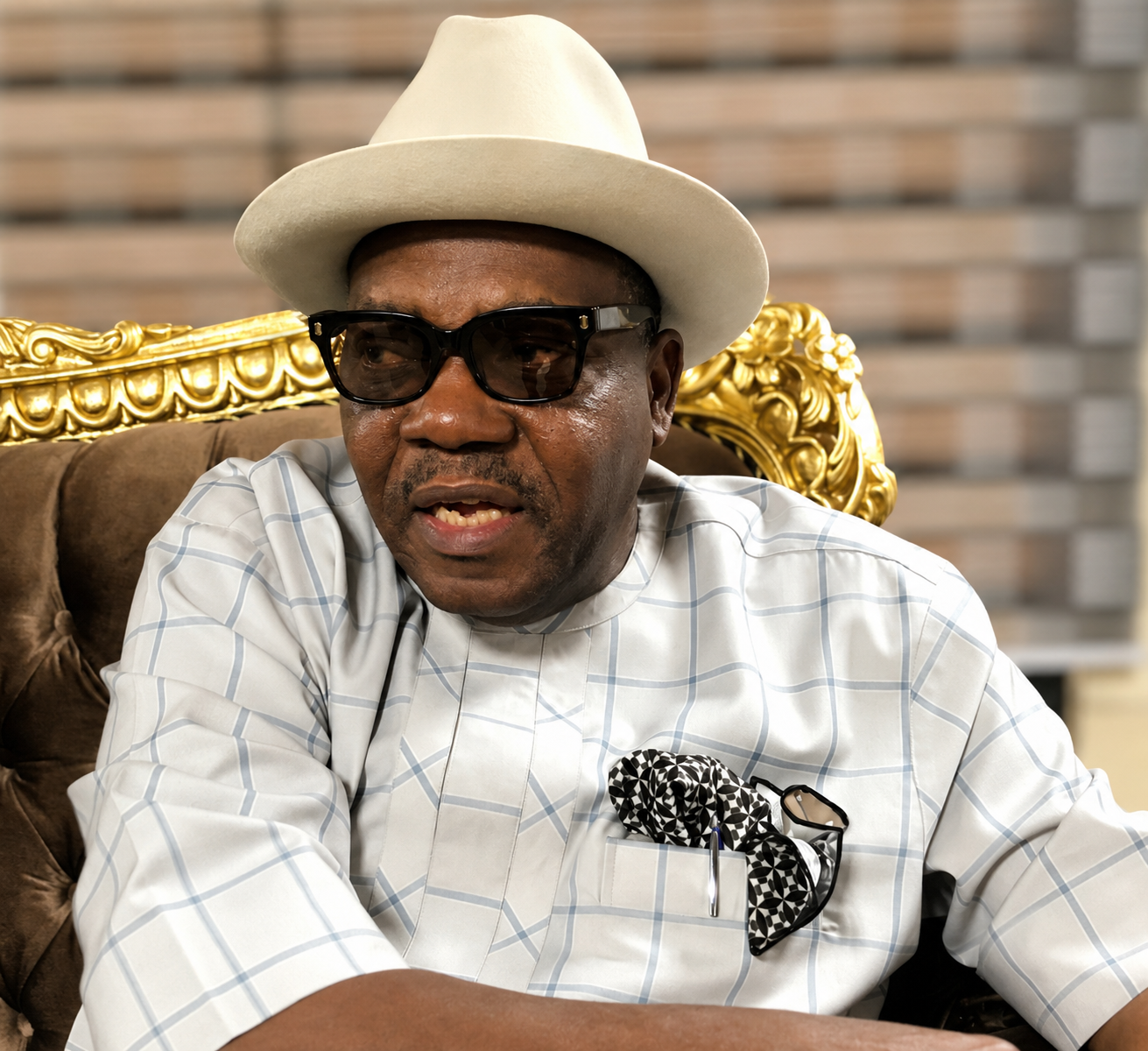
Thank you for reading this post, don't forget to subscribe!Former Nigerian Ambassador and retired Federal Permanent Secretary, Ambassador Godknows Boladei Igali, OON, has called for urgent and comprehensive intervention to address the deteriorating condition of federal roads across the South-South region.
Igali, who is the National Chairman of the Pan-Niger Delta Forum (PANDEF) and Ibetariowei of Izonland, said the poor state of roads had reached a critical level, warning that the region was gradually becoming cut off from other parts of Nigeria.
He spoke during an interview on Channels Television’s The Morning Brief programme.
According to him, the situation is affecting economic activities, social interaction and the movement of people and goods across the region.
“We have reached a situation where the South-South is almost cut off from the rest of the country, and internally, we cannot commute among ourselves,” Igali said.
The PANDEF chairman said his frequent travels across the region had given him firsthand knowledge of the condition of the roads, noting that the absence of an effective rail network had left residents heavily dependent on the highways.
He particularly criticised the performance of some contractors handling major road projects in the region, arguing that inadequate technical competence and poor supervision were contributing to the worsening situation.
Igali said the excuse of rainfall was not sufficient to explain the slow pace of work on roads in the Niger Delta, given the region’s known climatic and geographical conditions.
“You would have known from the beginning that this area has the highest level of rainfall. The water table is very high, and sometimes it is marshy in some places,” he said.
He urged the Federal Ministry of Works to undertake a comprehensive review of the competence of contractors, the supervision of projects and the concession arrangements governing some of the roads.
“There is a need for a more comprehensive and holistic overview of the concessions and the state of the work being done by the contractors,” Igali said.
‘We’re Not Crying Wolf’
The former diplomat cited several major road corridors across the South-South which, according to him, have become increasingly difficult for motorists to navigate.
He mentioned the Port Harcourt-Bayelsa-Delta corridor, the Benin-Sapele road, the Benin-Ore axis and the Eleme Junction-Onne corridor in Rivers State.
Igali recalled being trapped for about four hours around the Eleme Junction-Onne area, describing the experience as unacceptable in a region that contributes significantly to Nigeria’s economy.
“We’re not crying wolf. It is real,” he said.
He commended the Minister of Works, David Umahi, for visiting some of the affected areas and expressing concern over the condition of the roads.
Igali also welcomed the Minister’s decision to take responsibility for addressing the challenges, urging the Federal Government to translate the assurances into concrete action.
“If a Minister of the Federal Republic says, ‘I’m sorry, I take responsibility,’ it’s okay. We have asked our youths and our people to be patient,” he said.
Niger Delta Deserves Greater Priority
Igali argued that the Federal Government should give greater attention to infrastructure in the Niger Delta because of the region’s contribution to Nigeria’s economic wealth.
While acknowledging that road infrastructure was important across the country, he maintained that the Niger Delta should not be neglected.
“We are not asking that only roads in the Niger Delta should be attended to. We know the country is large and the responsibilities are very high,” he said.
“But how fair and how just is it that where the wealth is coming from, the roads are in such a terrible condition?”
The PANDEF chairman said the poor roads were negatively affecting businesses, social activities and the ability of residents to move freely across the region.
He also called for greater investment in the region’s ports, questioning why recent funding for port rehabilitation was concentrated on Tin Can Island and Apapa ports in Lagos.
“What of Warri Port? What of Port Harcourt Port? What of Calabar Port? What of Onne Port?” Igali asked.
He said the perceived exclusion of South-South ports from such interventions had contributed to the feeling among people in the region that they were being left behind.
Igali Advocates True Fiscal Federalism
Beyond the immediate road crisis, Igali called for a restructuring of Nigeria’s fiscal system, arguing that greater fiscal autonomy for the states would enable sub-national governments to undertake more development projects without depending entirely on the Federal Government.
He referred to the fiscal arrangement of the First Republic, when regions retained a greater share of the resources generated within their territories.
“If there was proper fiscal federalism, like in the First Republic, where you keep 50 per cent of what you have, the governors of the South-South would not be begging anybody to come and do federal roads,” he said.
Igali argued that states in the region could do more to improve infrastructure if they had greater control over their resources.
He, however, acknowledged the efforts of some South-South governors, citing road projects being undertaken in Bayelsa and Delta states.
He specifically mentioned the Nembe-Brass road project in Bayelsa State and the road linking Oporoma and other communities in Southern Ijaw Local Government Area.
According to him, improved infrastructure could also encourage increased oil production and economic activity in the region.
“Nigeria can increase its oil production. We were doing two million barrels before. We can go even up to three million barrels of oil production,” Igali said.
He maintained that creating better conditions for communities in the oil-producing region would strengthen cooperation between the people, state governments and the Federal Government.
“But let the areas be made happy. Let the infrastructural situation of the area be looked into,” he appealed.
Governors Must Collaborate
While calling for greater federal intervention, Igali also urged South-South governors to collaborate more closely and deploy available resources to address infrastructure challenges affecting their people.
He said state governments should not always wait for the Federal Government before intervening in areas that directly affect their citizens.
“The governors should have greater conversations among themselves to collaborate and fix some of this infrastructure, especially the roads, because they primarily serve their citizens,” he said.
Igali further advocated stronger regional cooperation in healthcare and other sectors, suggesting that neighbouring states could pool resources to establish major facilities and execute projects of common interest.
He said similar cooperation should be encouraged between the South-South and South-East regions.
“There should be greater intra-regional cooperation. It will help to lessen the burden on the Federal Government,” he said.
‘Our People Are Not Happy’
Igali warned that the prolonged deterioration of infrastructure in the Niger Delta was generating growing frustration among residents.
“Our people are not happy. Let nobody be deceived. Our people are not happy. They are watching. They are looking,” he said.
He urged the Federal Government to treat the situation as an urgent national development issue, rather than merely a regional concern.
According to him, improving infrastructure in the Niger Delta would not only benefit the region but also strengthen Nigeria’s economy and improve national connectivity.
“It’s the goose that lays the egg. Feed that goose,” Igali declared.
The PANDEF chairman commended the Federal Government for its broader efforts to improve road connectivity across the country but stressed that the current condition of South-South roads required immediate attention.
He said the situation should serve as a wake-up call for government at all levels to review project execution, contractor competence, supervision, funding arrangements and intergovernmental cooperation.
“I think what has happened this year, with these concessions and the very bad situation with the roads, is a wake-up call,” Igali said.
Kindly share